Allergy-Friendly Cleaning: How to Choose Products That Reduce Triggers
 May, 12 2026
Do you ever feel like your home is working against you? You scrub the counters, vacuum the floors, and wipe down the surfaces, yet you still find yourself sneezing or coughing shortly after. It turns out that standard cleaning methods might actually be making your allergies worse. Conventional sprays often just move allergens around rather than removing them, while releasing harsh chemicals into the air you breathe.
This is where allergy-friendly cleaning comes in. These specialized products are designed to trap and remove common irritants like dust mites, pet dander, and pollen without triggering respiratory issues. But with so many "green" labels on the shelf, how do you know which ones actually work? Let's break down what makes a cleaner truly safe for sensitive lungs and skin.
Why Regular Cleaners Trigger Reactions
Most of us grew up using products that smell like pine, lemon, or bleach. We associate that strong scent with cleanliness. However, those scents usually come from synthetic fragrances that act as powerful irritants. According to a landmark study published in the European Respiratory Journal, frequent use of conventional cleaning sprays increases the risk of developing adult-onset asthma by 51%. That is a significant jump, especially when you consider how often we clean our homes.
The problem isn't just the smell. Standard cleaners often contain volatile organic compounds (VOCs) and ammonia. When you spray these onto a surface, they evaporate quickly, filling your indoor air with microscopic particles. For someone with healthy lungs, this might just cause a slight eye-watering sensation. For someone with asthma or chronic rhinitis, it can trigger an attack. Furthermore, dry wiping-a common habit when dusting-actually lifts dust mite debris and pollen back into the air, where you inhale it. Studies show that standard dry wiping fails to remove food allergens like peanut powder or milk residue from 87% of tested surfaces.
The Gold Standard: Third-Party Certification
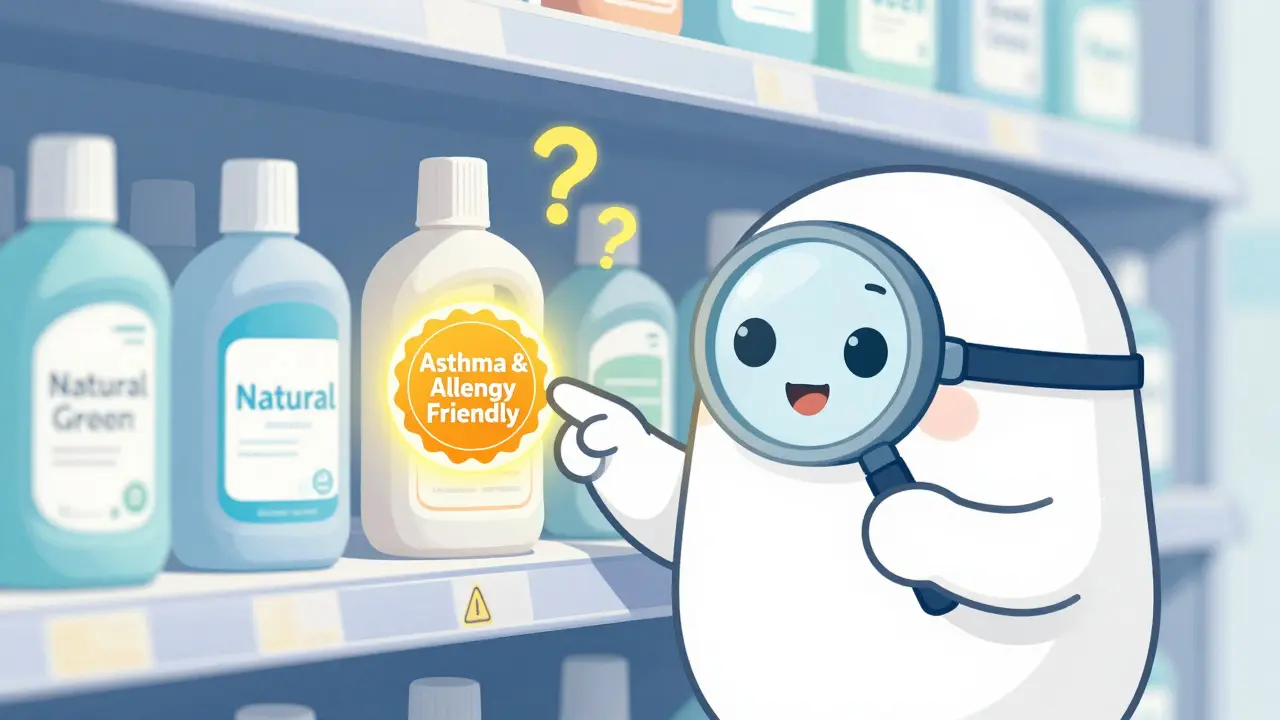
You will see words like "natural," "eco-friendly," and "non-toxic" everywhere. Unfortunately, these terms are not regulated. A product can claim to be natural but still contain hidden fragrance masking agents that trigger reactions in 18% of sensitive individuals. This practice, known as greenwashing, leaves consumers guessing.
To cut through the noise, look for third-party certifications. The most respected is the Asthma & Allergy Friendly® certification program, managed by the Asthma and Allergy Foundation of America. To earn this seal, a product must meet strict criteria:
- Allergen Removal: It must remove over 85% of common allergens, including dust mite debris, pet dander, and pollen, from hard surfaces.
- VOC Limits: Emissions must stay below 0.5 parts per million.
- Fragrance Control: It cannot contain undisclosed fragrance compounds that serve only to mask odors.
In May 2024, Dr. Stephanie Leeds, Chief Medical Officer at the foundation, testified before the EPA that only 37% of products marketed as "hypoallergenic" actually meet clinical standards for reduced exposure. This statistic highlights why checking for a verified seal is crucial. Certified products represent about 29% of the $4.2 billion hypoallergenic market, indicating a growing consumer demand for transparency.
Key Ingredients to Look For (and Avoid)
Understanding the ingredient list helps you make smarter choices. You don't need a chemistry degree, but knowing a few key players makes shopping easier.
Safe Surfactants: Look for potassium cocoate, derived from coconut oil. Research identifies concentrations of 5-15% as effective for lifting dirt without irritating mucous membranes. Potassium citrate is another good sign; it acts as a water softener and chelating agent, helping the cleaner bind to allergens more effectively.
Safer Disinfectants: Traditional disinfectants rely on bleach or high-concentration ammonia. Allergy-friendly alternatives often use hydrogen peroxide at a 3-5% concentration. This oxidizes bacteria and viruses safely without leaving behind harsh chemical residues. Ethanol solvents from renewable corn sources (10-20%) are also used for degreasing without the toxic fumes associated with petroleum-based solvents.
What to Avoid: If you see "fragrance," "parfum," or "denatured alcohol" near the top of the list, put the bottle back. Also, avoid quaternary ammonium compounds (quats), which are common in disinfectant wipes and have been linked to increased asthma symptoms in multiple studies.
Cleaning Techniques Matter Just as Much
Even the best-certified product won't help if you use it incorrectly. The method you use determines whether allergens stay on the surface or fly into the air. The most effective technique identified across multiple studies is the "two-cloth method."
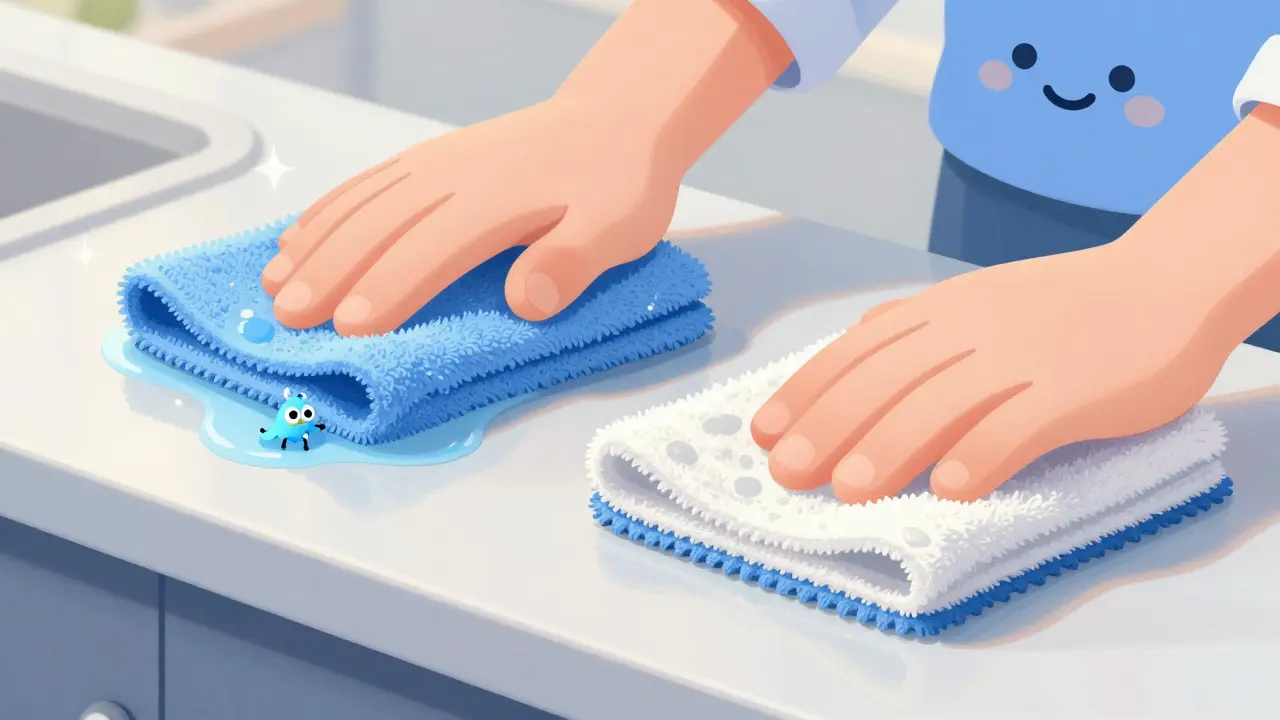
- First Pass: Use a damp microfiber cloth with your allergy-friendly cleaning solution. The moisture traps the allergens, preventing them from becoming airborne.
- Second Pass: Immediately follow with a second damp cloth containing only plain water. This rinses away any remaining cleaning residue and ensures no sticky film is left behind to attract new dust.
This approach reduces airborne allergen resuspension by 63% compared to single-cloth methods. Microfiber cloths are essential here because their fine fibers physically trap dust mites and pollen, unlike cotton rags that often just push them around. Replace or wash your microfiber cloths frequently, as a dirty cloth becomes a source of allergens itself.
Also, consider adopting wet cleaning methods for floors. Vacuuming alone can kick up dust. Using a damp mop with a certified cleaner removes embedded allergens from floorboards and tiles. Aim to clean high-allergen areas like bedding weekly and floors bi-weekly. This schedule helps maintain low baseline levels of irritants in your home.
Navigating the Market: Brands and Costs
Switching to allergy-friendly products does change your budget. Non-certified "natural" cleaners average around $3.25 per 32oz, while certified products average $5.75 per 32oz. The price difference reflects the cost of rigorous testing and formulation. However, the health savings can be significant. In a 2023 Healthy Home Project, families using certified protocols saw a 41% reduction in emergency room visits for asthma exacerbations over 12 months.
| Product Type | Avg. Cost (32oz) | Allergen Removal Efficiency | Risk Level for Asthma |
|---|---|---|---|
| Conventional Spray | $2.50 | Low (<40%) | High (Increases risk by 30-50%) |
| Non-Certified "Natural" | $3.25 | Moderate (~76%) | Moderate (Hidden fragrances possible) |
| Certified Hypoallergenic | $5.75 | High (>85%, up to 92%) | Low (Reduces symptoms by 22%) |
Some brands have built strong reputations in this space. Renegade Brands' Sweat-X Free and Clear detergent, for example, demonstrated 92% allergen removal efficiency in independent testing. Seventh Generation's Free & Clear line is another popular choice, with users reporting significant reductions in eczema flare-ups. Attitude is also a notable player, focusing on plant-based ingredients. Remember, even within trusted brands, always check for the specific certification seal on the current batch, as formulations can change.
Homemade Solutions: Do They Work?
Many people turn to vinegar and water as a cheap, DIY alternative. A 1:1 ratio of white vinegar to water works well for general cleaning and cutting grease. Dr. Claudia Miller of UT Health San Antonio advocates for this simple mix for 83% of household needs. However, there is a catch. Vinegar solutions remove only about 67% of peanut residue, compared to 89% for certified commercial products. If you have severe food allergies or environmental sensitivities, homemade solutions may not provide the level of protection you need. They also lack standardized efficacy data, meaning you never quite know how much allergen remains on the surface.
If you prefer DIY, consider adding a small amount of castile soap to your vinegar mix to improve its surfactant properties. But for critical areas like kitchen counters where food allergens accumulate, sticking to certified products is safer.
Real-World Impact and User Experiences
Data tells one story, but user experiences bring it to life. On online forums dedicated to asthma management, users consistently report relief after switching to certified products. One highly voted comment noted that switching laundry detergents reduced a child's eczema flare-ups by 70% within three weeks. Amazon reviews for certified cleaners show an average 4.3-star rating, with 82% of five-star reviews specifically mentioning "reduced sneezing" or "fewer allergy symptoms."
Of course, there are complaints. The higher cost is cited in 37% of negative reviews. Some users also perceive certified cleaners as weaker on heavy grease, though this is often a matter of technique-using more dwell time (letting the cleaner sit for a minute) improves performance without needing harsh chemicals. The trade-off between aggressive cleaning power and respiratory health is a personal one, but for those with diagnosed conditions, the health benefits clearly outweigh the minor inconvenience.
Are unscented cleaning products always safe for allergies?
Not necessarily. Many "unscented" products contain masking fragrances that hide the smell of chemicals but still trigger allergic reactions. Always look for "fragrance-free" or a third-party certification like Asthma & Allergy Friendly® to ensure no hidden irritants are present.
How much does it cost to switch my entire home to allergy-friendly cleaners?
A complete transition typically costs between $75 and $150 initially. While this is higher than buying conventional cleaners, the long-term health benefits, such as reduced medical visits for asthma exacerbations, often offset the expense.
Can I use vinegar instead of commercial allergy-friendly cleaners?
Vinegar is effective for general cleaning and reducing some irritants, but it removes only about 67% of certain food allergens like peanut residue. Certified products remove up to 89%. For severe allergies, commercial certified products are safer.
What is the two-cloth cleaning method?
The two-cloth method involves wiping a surface first with a damp cloth and cleaning solution, then immediately following with a second damp cloth and plain water. This reduces airborne allergen resuspension by 63% and removes chemical residues.
How do I know if a cleaning product is truly hypoallergenic?
Look for third-party certifications, specifically the Asthma & Allergy Friendly® seal. Only 37% of products labeled "hypoallergenic" meet clinical standards, so independent verification is essential for safety.