Antihistamines and Glaucoma: Why Some Allergy Meds Can Threaten Your Vision
 Jan, 31 2026
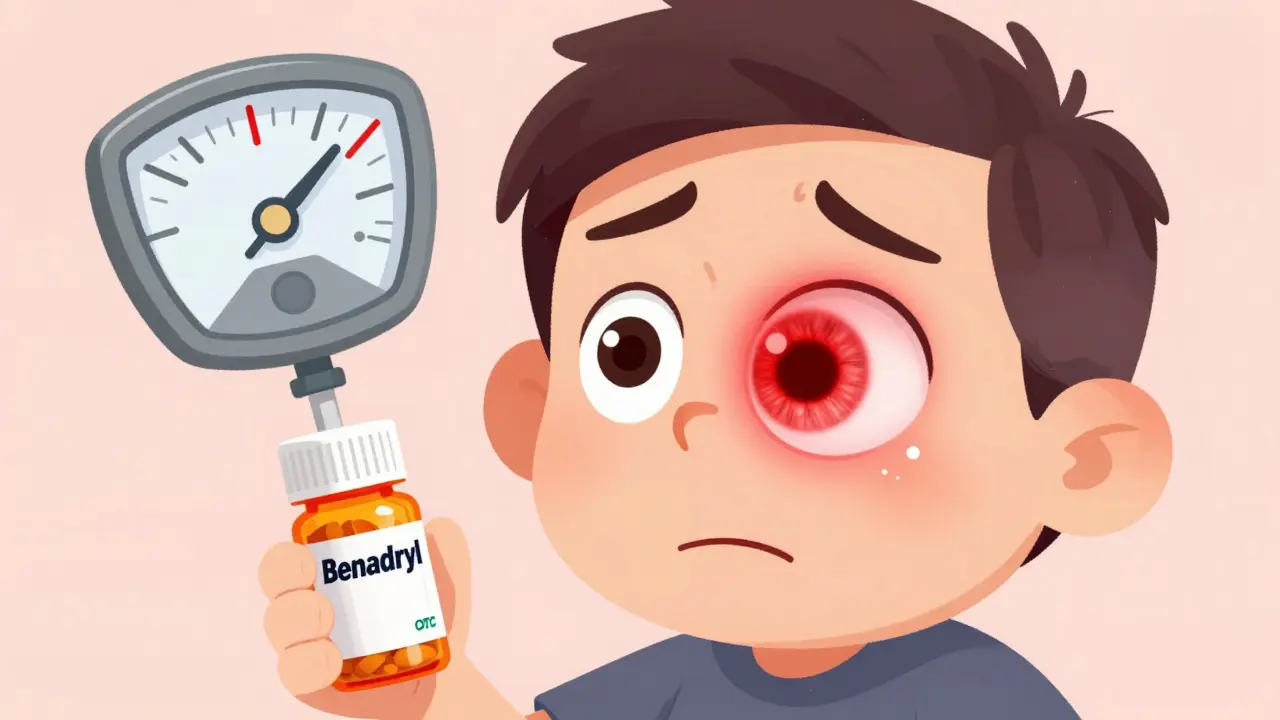
If you have glaucoma and reach for an over-the-counter allergy pill when your nose starts running, you could be putting your vision at risk - even if you feel fine. It’s not a myth. It’s not a warning on a label you skipped. It’s a real, documented danger that affects hundreds of thousands of people who don’t even know they’re at risk.
Not All Glaucoma Is the Same
Glaucoma isn’t one disease. It’s a group of conditions that damage the optic nerve, usually because pressure builds up inside the eye. But how that pressure builds matters. About 70% of people with glaucoma have primary open-angle glaucoma (POAG). Their drainage system is slow, clogged over time. For these people, most common allergy meds are generally safe - except steroids. Long-term steroid use, even in nasal sprays or eye drops, can raise eye pressure and make POAG worse. But the other 10% to 15%? Those with narrow-angle glaucoma are in a different category. Their drainage angle is physically tight, like a door that’s almost shut. A small push - like a dilated pupil - can slam it closed. And that’s where antihistamines and decongestants become dangerous.How Antihistamines Trigger an Eye Emergency
First-generation antihistamines like diphenhydramine (Benadryl) and chlorpheniramine work by blocking histamine to stop sneezing and itching. But they also block another chemical in your body: acetylcholine. That’s what keeps your pupils small. When acetylcholine is blocked, your pupils widen - a side effect called mydriasis. In someone with narrow angles, that dilation pushes the iris forward, blocking the drainage channel completely. Fluid can’t escape. Pressure spikes - sometimes within hours. This is acute angle-closure glaucoma, and it’s a medical emergency. Symptoms include sudden blurry vision, severe eye pain, headache, nausea, and seeing halos around lights. Without quick treatment, permanent blindness can follow. A 2020 study in the PMC database found that people taking daily anticholinergic drugs - including many antihistamines - had over five times the risk of this sudden pressure spike. And it’s not just allergy pills. Cold and flu meds, sleep aids, and even some antidepressants contain the same ingredients.Which Medications to Avoid
If you have narrow-angle glaucoma, steer clear of these common OTC ingredients:- Diphenhydramine - Benadryl, NyQuil, ZzzQuil
- Chlorpheniramine - Chlor-Trimeton, many cold formulas
- Pseudoephedrine - Sudafed, decongestants
- Phenylephrine - Neo-Synephrine, some sinus meds
- Meclizine - Bonine, Dramamine (for motion sickness)
- Phenergan - for nausea and allergies
What’s Safer? Second-Generation Antihistamines
The good news? Not all antihistamines are created equal. Second-generation options like loratadine (Claritin), cetirizine (Zyrtec), and fexofenadine (Allegra) were designed to stay out of the brain and eyes. They cause little to no pupil dilation. For most people with narrow-angle glaucoma, these are considered low-risk. But “low-risk” doesn’t mean “risk-free.” Everyone’s anatomy is different. Even these meds can cause issues in rare cases, especially if you’ve never had your eye pressure checked recently. That’s why your eye doctor is your best guide - not the pharmacy shelf.
Steroids: The Silent Glaucoma Trigger
Steroids are sneaky. They don’t cause angle closure. Instead, they slowly clog the drainage system in open-angle glaucoma patients. Topical nasal sprays, oral pills, and even inhaled steroids can raise eye pressure if used for more than 10 days without monitoring. The exact reason isn’t fully known, but experts think proteins build up in the drainage channels, like rust in a pipe. If you’re on a steroid for allergies or asthma, get your eye pressure checked after 10 days. And never use steroid eye drops without a prescription. Even a few weeks of unsupervised use can cause irreversible damage.Other Hidden Risks
It’s not just allergy meds. Some migraine drugs like topiramate (Topamax) and sumatriptan have been linked to angle closure. Sulfa-based antibiotics like sulfamethoxazole can cause swelling in the eye’s structures, pushing the iris forward. Even botulinum toxin injections around the eyes - used for wrinkles or muscle spasms - can raise pressure in people with narrow angles. And it’s not just medications. Certain antidepressants, especially SSRIs like sertraline and escitalopram, can also trigger acute angle closure. One study showed patients on daily doses over 20 mg had significantly higher risk. If you’re on these meds and have glaucoma, tell your eye doctor. They need to know everything you’re taking.What If You Don’t Know Your Type?
This is the biggest problem. Many people with narrow-angle glaucoma don’t know they have it. They’ve never had symptoms. Their vision is fine. They’ve never been told. But if they take Benadryl for a cold, they might wake up in pain - with their vision gone. The American Academy of Ophthalmology now recommends that everyone over 40 get a gonioscopy during their routine eye exam. This simple test lets the doctor look directly at the drainage angle. If it’s narrow, they can warn you - and even perform a quick laser procedure called a peripheral iridotomy to create a new drainage path. That procedure reduces the risk of angle closure by over 90%. If you’ve never had this test, ask for it. It takes less than five minutes. It’s painless. And it could save your sight.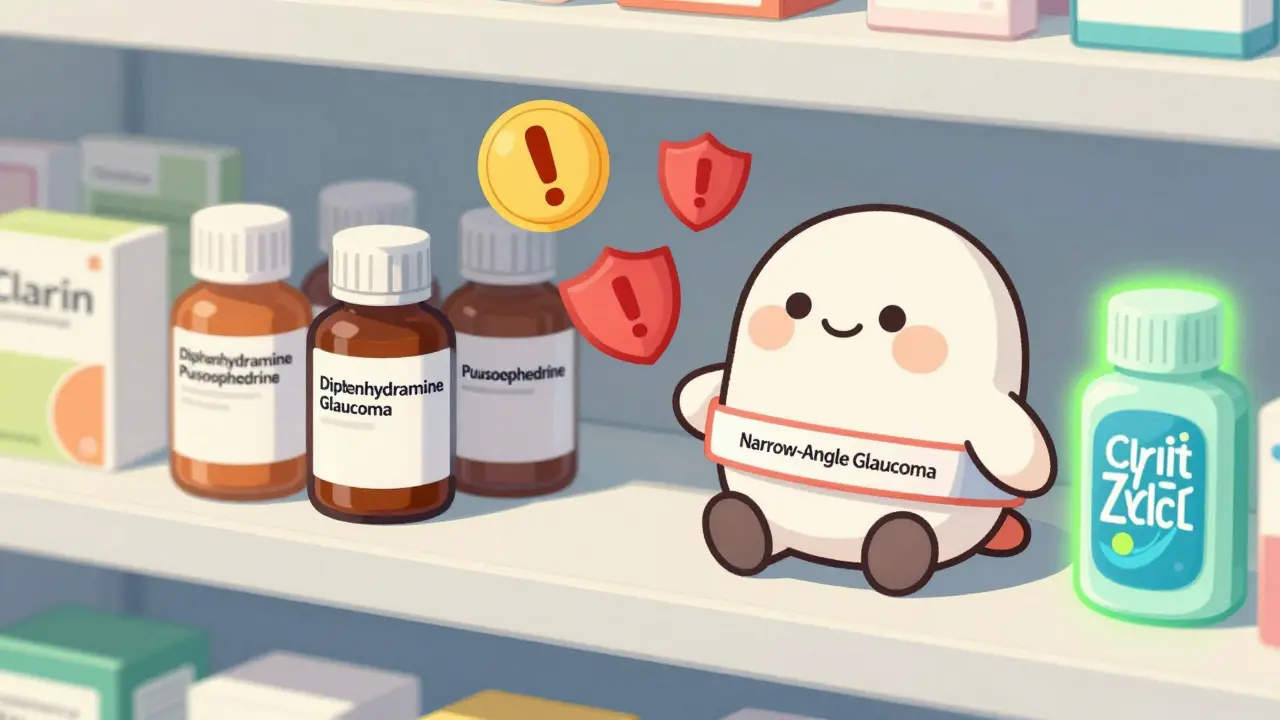
What Should You Do?
Here’s your action plan:- Know your glaucoma type. If you’re unsure, call your eye doctor and ask: “Do I have open-angle or narrow-angle glaucoma?”
- If you have narrow-angle glaucoma, avoid all first-generation antihistamines and decongestants. Stick to loratadine, cetirizine, or fexofenadine - but still check with your doctor first.
- Never use steroid nasal sprays, eye drops, or pills for more than 10 days without checking your eye pressure.
- Keep a list of all medications you take - including supplements and OTCs - and bring it to every doctor visit.
- Wear a medical ID bracelet that says “Narrow-Angle Glaucoma” in case of emergency.
- Get a gonioscopy if you’re over 40 and haven’t had one yet.
What About Natural Alternatives?
You’ll find plenty of online advice about “natural antihistamines” - quercetin, butterbur, vitamin C. But here’s the truth: there’s no solid evidence these work better than prescription meds. And for people with narrow-angle glaucoma, unregulated supplements aren’t safer. They’re untested. They could still have unknown side effects. Stick to what’s been studied and approved by your eye doctor.The Bigger Picture
One in five people in the UK has hay fever. Three million have glaucoma. That means up to 450,000 people could be at risk from common allergy pills - and most don’t know it. The OTC medicine market is worth over $11 billion. But labels don’t warn about glaucoma. Pharmacists aren’t trained to ask. Patients aren’t told. That’s why education is critical. Your eye doctor isn’t just checking your vision. They’re protecting your life.What to Do If You Think You’re Having an Attack
Sudden eye pain? Blurry vision? Nausea? Halos around lights? Don’t wait. Don’t take more pills. Don’t try to “wait it out.” Go to the ER or call your eye doctor immediately. Acute angle-closure glaucoma can cause blindness in hours. Speed saves sight.Can I take Claritin if I have glaucoma?
Yes, loratadine (Claritin) is generally safe for people with glaucoma because it doesn’t cause pupil dilation. It’s a second-generation antihistamine with minimal effect on the eyes. But always confirm with your eye doctor, especially if you have narrow-angle glaucoma. Even low-risk meds should be reviewed in your full medical context.
Is Benadryl dangerous for glaucoma patients?
Yes. Diphenhydramine (Benadryl) is one of the most common triggers for acute angle-closure glaucoma in people with narrow angles. It causes pupil dilation, which can block the eye’s drainage system and cause a dangerous pressure spike. Avoid it completely if you have narrow-angle glaucoma - and even if you’re unsure of your type, it’s safer to skip it.
Can steroid nasal sprays cause glaucoma?
Yes. Long-term use of steroid nasal sprays - more than 10 days - can raise eye pressure in anyone, but especially in people with open-angle glaucoma. The steroids cause proteins to build up in the eye’s drainage system, blocking fluid flow. Always limit use to the shortest time possible and get your eye pressure checked after prolonged use.
What’s the difference between open-angle and narrow-angle glaucoma?
Open-angle glaucoma means the drainage angle is open but clogged slowly over time - it’s the most common type. Narrow-angle glaucoma means the angle is physically tight or closed, so anything that dilates the pupil - like certain medications - can suddenly block drainage and cause a rapid pressure spike. The treatment and medication risks are very different.
Can laser surgery fix narrow-angle glaucoma?
Yes. A laser peripheral iridotomy creates a small hole in the iris to allow fluid to flow freely, preventing angle closure. It’s a quick, outpatient procedure that reduces the risk of sudden pressure spikes by over 90%. If you’re diagnosed with narrow angles, this is often the best long-term solution.
Should I get tested for narrow angles if I’ve never had glaucoma symptoms?
Yes. Many people with narrow angles have no symptoms until they take a medication like Benadryl and suddenly lose vision. The American Academy of Ophthalmology recommends a gonioscopy - a simple, painless test - for everyone over 40 during their routine eye exam. If your doctor hasn’t offered it, ask for it.
Bob Cohen
February 1, 2026 AT 05:33Man, I just took Benadryl last week for my allergies and thought I was being smart. Guess I was just being dumb. Thanks for laying this out like a medical textbook with soul. I’m getting my gonioscopy next week.
Naomi Walsh
February 3, 2026 AT 00:16It’s frankly astonishing that pharmaceutical companies are allowed to market these drugs without explicit warnings for glaucoma patients. This isn’t negligence-it’s predatory capitalism disguised as consumer convenience. The fact that pharmacists aren’t mandated to screen for this is a systemic failure of medical ethics. I’ve personally seen three patients lose peripheral vision because they took ‘just one pill.’
Aditya Gupta
February 3, 2026 AT 17:46bro i had no idea. i use zzzquil every time i get a cold. just saved my eyes lol. ty for the heads up!
Nancy Nino
February 4, 2026 AT 02:26How is it possible that, in the year 2025, a drug with such a well-documented risk profile remains unregulated at the OTC level? The FDA’s inaction here is not merely bureaucratic inertia-it is a moral abdication. One must question the integrity of an entire regulatory framework that prioritizes profit over preventable blindness.
Jaden Green
February 5, 2026 AT 10:55Let’s be honest-this entire post reads like a pharmaceutical marketing pamphlet disguised as public service. Who actually reads these long-form medical articles? The people who need to know this already have doctors. The rest of us are just scrolling through Reddit while eating cold pizza at 2 a.m. and taking Benadryl because we’re tired, not because we’re stupid. And let’s not pretend that ‘second-generation antihistamines’ are some kind of magic bullet-everything has side effects. Even water. You’re just replacing one risk with another, and then selling us peace of mind for $12 a bottle.
Angel Fitzpatrick
February 6, 2026 AT 23:03They don’t want you to know this. The eye industry, Big Pharma, the FDA-they’re all connected. That laser iridotomy? It’s a billion-dollar procedure. They’re letting people go blind slowly so they can sell you the fix later. And don’t get me started on how they’ve been suppressing research on natural alternatives like stinging nettle and eyebright for decades. This isn’t medicine-it’s control. Wake up.
Nidhi Rajpara
February 8, 2026 AT 01:23I am writing to inform you that your article contains a grammatical error in the second paragraph: ‘Their drainage system is slow, clogged over time.’ This should be ‘Their drainage system is slow, and clogged over time.’ Also, I would like to emphasize that the use of ‘low-risk’ instead of ‘lower-risk’ is linguistically imprecise in a medical context. Precision matters.
Donna Macaranas
February 8, 2026 AT 09:11Just got my gonioscopy last month-narrow angles. Never knew. I’m so glad I found this. I’ve been taking Zyrtec for years and thought I was safe. Now I’m telling my whole family. Thanks for the clarity.
Jamie Allan Brown
February 9, 2026 AT 00:14Thank you for writing this with such care. I’m a GP in Glasgow, and I’ve had patients come in with acute angle-closure after taking Sudafed. I’ve started including a simple question in my routine check-ups: ‘Have you ever been tested for narrow angles?’ Most haven’t. We need more of this awareness-not just in the US, but everywhere.
Lisa Rodriguez
February 9, 2026 AT 16:08OMG I just checked my medicine cabinet and found three different things with diphenhydramine. I’m tossing them all. Also, I’m calling my ophthalmologist right now to ask for gonioscopy. This is the kind of info that should be on every pharmacy shelf
Nicki Aries
February 9, 2026 AT 22:49It’s terrifying. It’s unbelievable. It’s unacceptable. It’s preventable. It’s ignored. It’s tragic. It’s avoidable. It’s a crisis. And yet, nothing changes. Why? Because it’s easier to blame the patient than to fix the system.
Ed Di Cristofaro
February 10, 2026 AT 20:13Y’all act like Benadryl’s the devil. I’ve been taking it since I was 12. My eyes are fine. Stop scaremongering. If your doctor didn’t tell you, that’s on them-not the pill.
Sami Sahil
February 11, 2026 AT 09:34bro i got glaucoma last year and no one told me. now i only take allegra. life saver. if u have any doubt just ask ur eye doc. 5 min test can save ur sight. u got this!
Bryan Coleman
February 12, 2026 AT 05:25Wait-so if I’m on Zyrtec and my doctor prescribes me an SSRI, am I still at risk? I’ve got open-angle, but I’ve also got anxiety. Should I be worried about the combo? I’m not trying to panic, but… maybe I should get this checked?