Caffeine and Medications: How Your Morning Coffee Affects Your Meds
 Apr, 4 2026
Caffeine & Meds Interaction Guide
Check the buffer zone for your medication
Please select a medication category to see the recommended safety window and interaction effects.
-
Most of us don't think twice about sipping a latte while taking our morning pills. But for millions of people, that simple habit is a chemical gamble. Your morning brew isn't just a wake-up call; it's a potent pharmacological compound that can either mute your medication or crank its side effects up to a dangerous level. When caffeine hits your system, it doesn't just wake up your brain-it messes with the enzymes and receptors your body uses to process drugs.
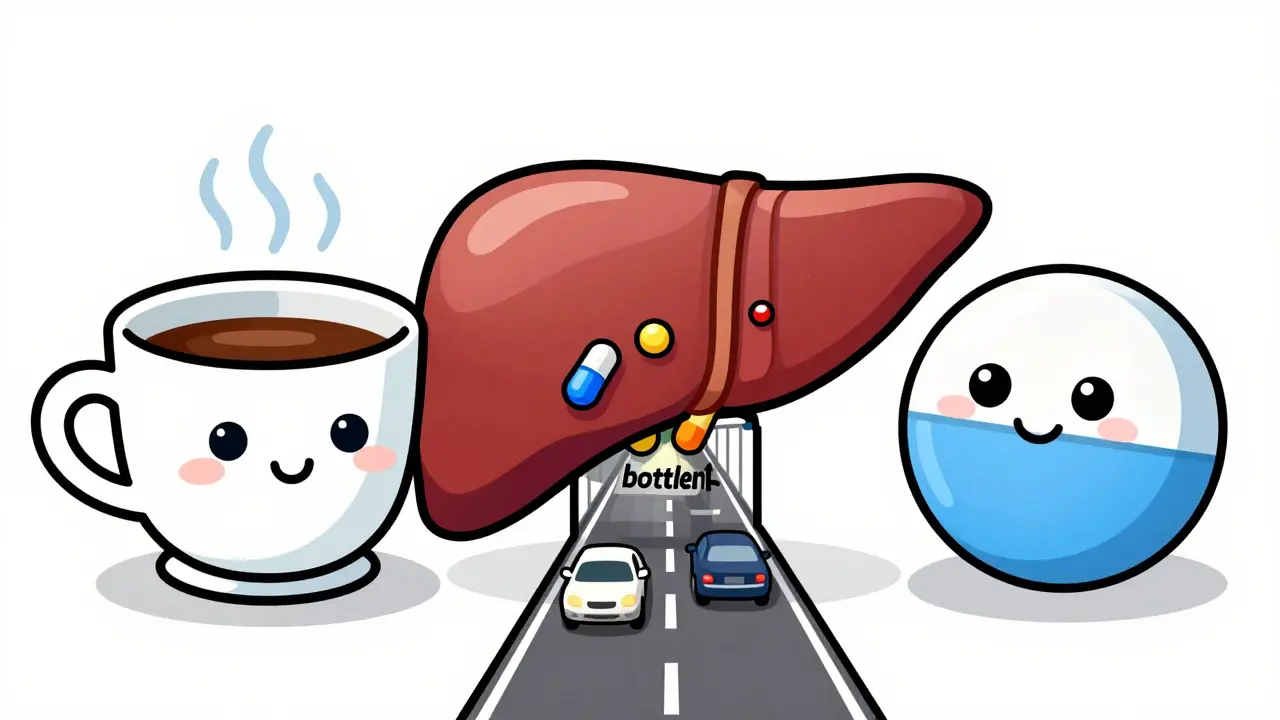
The core of the problem lies in a specific protein in your liver called CYP1A2 is a cytochrome P450 enzyme responsible for metabolizing about 10-15% of all clinically used drugs. Because caffeine is processed by this same enzyme, it can act like a bottleneck. If the enzyme is busy dealing with your double espresso, it can't break down your medication as efficiently. This leads to higher concentrations of the drug in your bloodstream, which can turn a standard dose into an accidental overdose. Conversely, caffeine can also block receptors that certain drugs need to work, effectively canceling out your treatment.
The Danger Zone: High-Risk Medication Groups
Not all interactions are equal. Some cause a slight dip in effectiveness, while others can send you straight to the emergency room. Understanding which class your medication falls into is the first step in staying safe.
Heart and Blood Pressure Meds
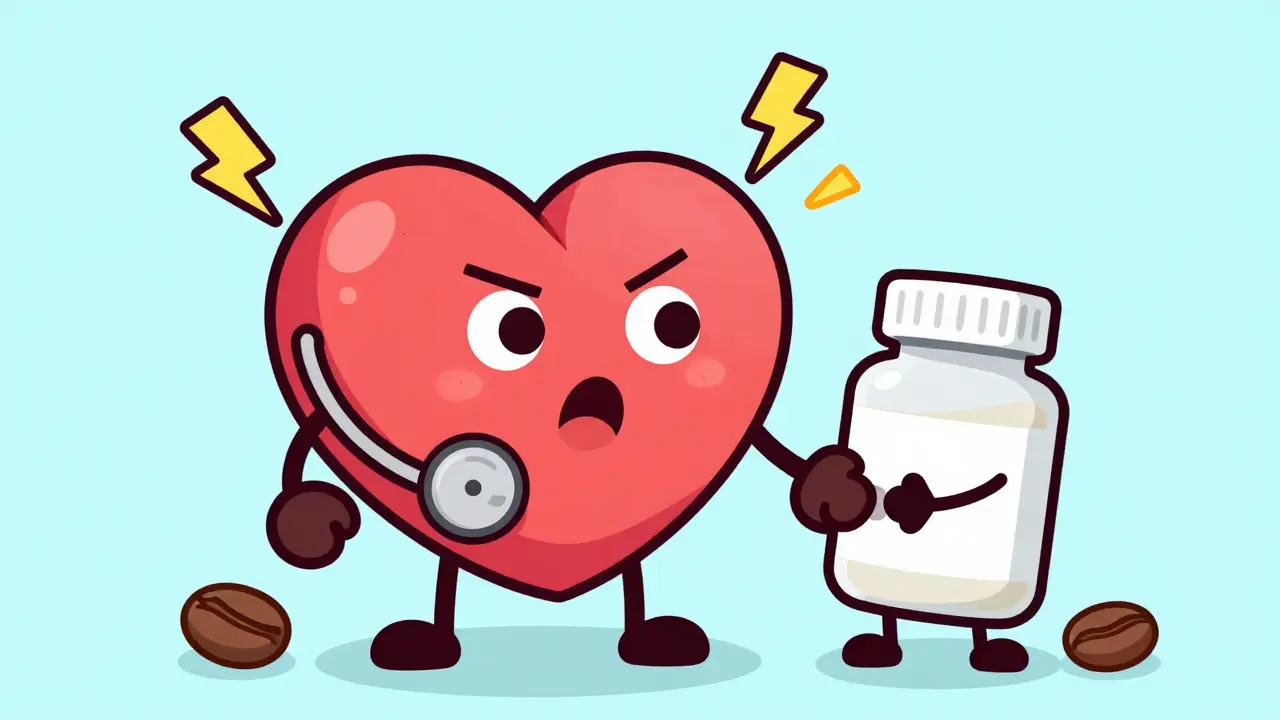
Caffeine is a stimulant, which is the opposite of what many heart medications try to achieve. For instance, Adenosine and Dipyridamole are used to slow the heart or open arteries, but caffeine blocks the adenosine receptors they target. This can reduce their effectiveness by up to 50%. If you're taking blood pressure meds like Verapamil, you might notice your diastolic blood pressure readings jump by 8-12 mmHg for a few hours after your coffee, essentially fighting against your own treatment.
Thyroid and Hormone Replacement
If you take Levothyroxine for hypothyroidism, coffee is your biggest enemy regarding absorption. Research shows that coffee can reduce the absorption of this hormone by 25% to 57%. It's not necessarily a chemical reaction in the blood, but rather a physical interference in the gut. This is why many patients report stable TSH levels suddenly spiking after they start drinking their coffee and taking their pill at the same time.
Mental Health and Psychiatric Drugs
The relationship here is complex. For people taking SSRIs like Fluvoxamine, coffee can hinder absorption by about 33%. On the flip side, tricyclic antidepressants like Amitriptyline can build up in your system because caffeine inhibits the CYP1A2 enzyme that's supposed to clear them out. This can increase plasma concentrations by 20-40%, making you feel more sedated or increasing the risk of dizziness.
Anticoagulants and Blood Thinners
When you're on blood thinners like Warfarin, consistency is everything. Caffeine can prevent the drug from breaking down, which may increase your International Normalized Ratio (INR) values by 15-25% within a day. While a small cup might not be a disaster, fluctuating between zero and five cups a day can make your blood clotting levels unpredictable and dangerous.
| Medication Class | Example Drug | Primary Effect | Typical Outcome |
|---|---|---|---|
| Thyroid Hormones | Levothyroxine | Reduced Absorption | Lower drug levels in blood |
| Anticoagulants | Warfarin | Inhibited Metabolism | Higher INR (Thinners blood) |
| Stimulants | Amphetamines | Additive Stimulation | Tachycardia & High BP |
| Cardiac Agents | Adenosine | Receptor Antagonism | 50% Reduced effectiveness |
| Psychiatric | Fluvoxamine | Interfered Absorption | Decreased therapeutic effect |
When the Combo Becomes a Crisis
The most immediate danger comes from "stacking" stimulants. If you combine caffeine with Pseudoephedrine (found in many cold meds) or ADHD medications like Adderall, you're essentially putting your cardiovascular system into overdrive. Clinical data shows heart rates can spike by 20-35 beats per minute and systolic blood pressure can rise by 15-25 mmHg within 45 minutes of consumption.
How do you know if you're having a bad reaction? Look for "red flag" symptoms. If you experience a heart rate over 120 bpm while resting, a systolic blood pressure over 180 mmHg, or sudden confusion and muscle twitching, it's time to seek medical help. These aren't just "jitters"; they are signs of severe pharmacological amplification.
Practical Rules for Managing Your Routine
You don't necessarily have to give up your coffee, but you do need to change when you drink it. The goal is to create a "buffer zone" so the caffeine and the medication don't compete for the same space in your gut or liver.
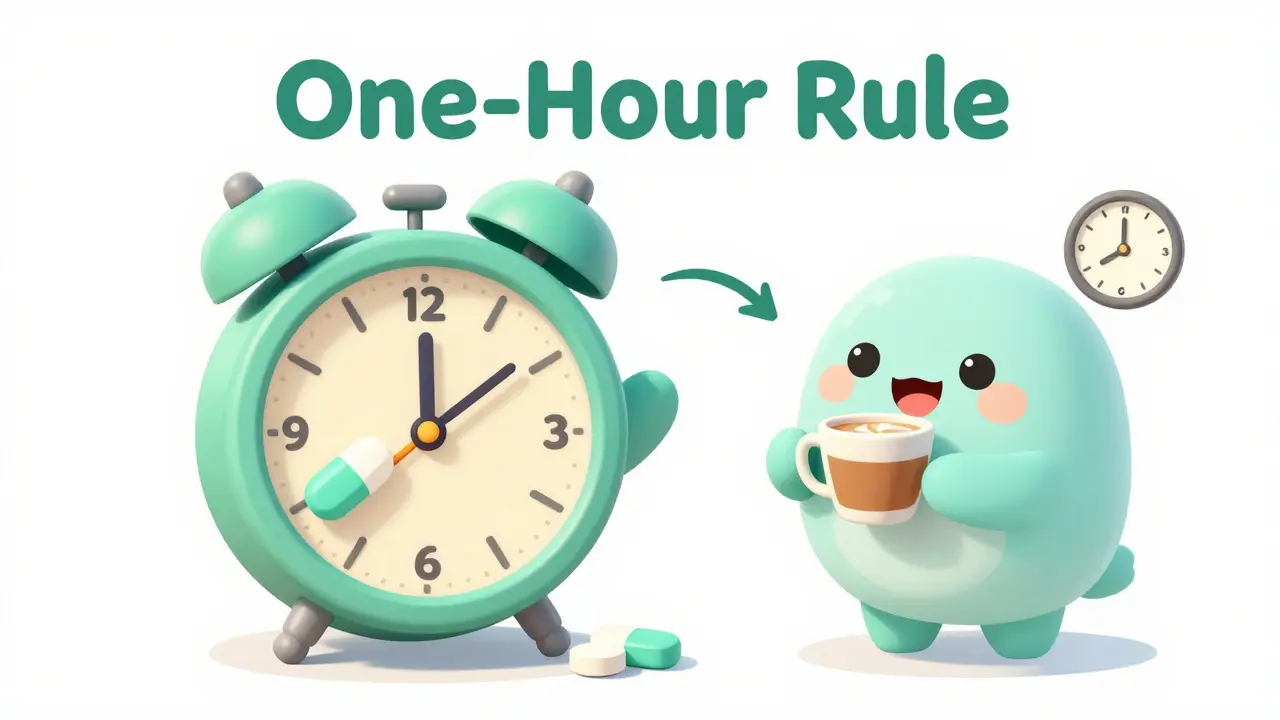
- The One-Hour Rule: For most medications, wait at least 60 minutes after taking your dose before having coffee. For thyroid meds, this is non-negotiable.
- The Two-Hour Gap: If you've already had your coffee, wait two hours before taking your medication to ensure the caffeine has cleared the primary absorption site in your stomach.
- Consistency is Key: If you're on blood thinners, avoid the "weekend binge." Stick to a steady limit-usually under 200 mg (about 2 cups)-to keep your liver enzymes working at a predictable rate.
- Watch the "Decaf" Trap: Decaffeinated coffee isn't caffeine-free; it still contains 2-15 mg per cup. For those on highly sensitive meds, this can still trigger a reaction.
For those taking cold medications with pseudoephedrine, the window is even larger. Experts suggest avoiding caffeine for 4 to 6 hours after dosing to prevent blood pressure spikes and dangerous increases in body temperature.
Does tea cause the same interactions as coffee?
Yes, because tea contains caffeine and other methylxanthines. While the concentration is usually lower than in coffee, the effect on the CYP1A2 enzyme and the interference with drug absorption (like levothyroxine) remains the same. Always apply the same timing buffers to tea as you would to coffee.
Why does my doctor tell me to avoid caffeine before a heart test?
Caffeine blocks adenosine receptors in the heart. Many cardiac stress tests use adenosine or similar compounds to evaluate blood flow. If caffeine is in your system, it blocks these drugs from working, which can lead to inconclusive results and force you to reschedule the test.
Can caffeine make my anxiety meds feel like they aren't working?
Absolutely. Caffeine can either physically block the absorption of medications like SSRIs or simply counteract the calming effect of the drug by triggering a fight-or-flight response. This often manifests as increased jitteriness or a feeling that the medication has "lost its punch."
Is it safe to take aspirin with coffee?
For most people, it is safe. However, some evidence suggests that high doses of caffeine combined with aspirin can increase the risk of gastrointestinal bleeding. If you have a sensitive stomach or a history of ulcers, it's best to avoid taking aspirin on an empty stomach with black coffee.
What should I do if I accidentally took my meds with coffee?
Don't panic, but monitor yourself. If you're taking thyroid meds, you might notice a slight dip in energy. If you're on stimulants or heart meds, watch for a racing heart or dizziness. In most cases, a one-time mistake isn't critical, but you should notify your doctor if you notice symptoms or if this becomes a frequent occurrence.
Next Steps for Patients
If you're unsure about your specific regimen, start by auditing your daily caffeine sources. This includes energy drinks, pre-workout powders, and even some over-the-counter pain relievers that contain caffeine. Bring this list to your pharmacist and ask specifically: "Does this medication use the CYP1A2 pathway?"
If you're experiencing unexpected side effects-like sudden insomnia while on ADHD meds or erratic blood pressure readings-try a two-week trial of the "One-Hour Rule." Separating your caffeine and medication is the simplest way to ensure your treatment actually works the way it's supposed to.
Divine Manna
April 4, 2026 AT 08:37The sheer lack of nuance regarding the bioavailability of these compounds is staggering. Most people fail to comprehend that the CYP1A2 enzyme is merely one piece of a much larger metabolic puzzle, yet we treat it as the sole arbiter of drug efficacy. It is a common fallacy to assume that a simple time buffer solves the underlying biochemical competition. True pharmacological mastery requires a holistic understanding of one's own genetic polymorphisms, something most of you blindly ignore while sipping your overpriced lattes. One must contemplate the irony of attempting to optimize health while remaining ignorant of the very mechanisms that govern cellular homeostasis. It is quite simple, really: if you do not understand the pharmacokinetics, you are essentially playing Russian roulette with your endocrine system. The provided guidelines are a rudimentary starting point, but for the intellectually curious, the real data lies in the peer-reviewed literature on cytochrome P450 induction. Anything less is just anecdotal guesswork disguised as medical advice. The pursuit of wellness is meaningless without the rigor of scientific literacy. I find it exhausting that basic biochemistry is treated as some sort of hidden occult secret in these forums. Precision is not an option; it is a requirement for survival in a chemically saturated world.
Mark Zhang
April 6, 2026 AT 07:13This is a really helpful breakdown for anyone struggling to figure out why their meds feel inconsistent. It just takes a little bit of planning to get those timing buffers right. You've got this!
Beth LeCours
April 6, 2026 AT 17:37too long didn't read
Brian Shiroma
April 7, 2026 AT 13:12Oh sure, because waiting an hour is definitely the most convenient thing in the world for people who literally cannot function without caffeine. Truly a life-changing tip for the three of us who actually have a morning routine.
sophia alex
April 9, 2026 AT 09:16Ugh, I bet the coffee in this country is the only thing actually working here! 🙄 Honestly, the audacity of some people to ignore these warnings is just peak dysfunction. Like, do you WANT to end up in the ER? Get it together! 💅✨
Rachelle Z
April 10, 2026 AT 02:30Wow... just wow!!! 🙄 I love how we act like a cup of joe is a biohazard now!!! ☕️🤣 Just take the pill and move on with your life, people!!! 🌈✨
Ace Kalagui
April 11, 2026 AT 06:24I've seen a lot of people in my community struggle with this exact issue and it's honestly so heartwarming to see a guide that explains it in a way that anyone can understand without needing a medical degree. I remember a friend of mine who was always wondering why his blood pressure kept spiking, and after we sat down and looked at his habits, it turned out to be the pre-workout caffeine hitting at the same time as his medication, so it's just really important to be mindful of these little things. Let's all try to support each other in making these small changes to our routines because a little bit of patience in the morning can lead to a much healthier life for everyone involved in the long run.
Branden Prunica
April 13, 2026 AT 04:30My heart literally stopped for a second reading the part about the 'Danger Zone.' I can't believe I've been doing this for years and didn't know! My life is a total disaster!
Hope Azzaratta-Rubyhawk
April 13, 2026 AT 14:53It is absolutely imperative that every single person reading this implements the One-Hour Rule immediately! There is no excuse for neglecting your health when the solution is this straightforward. You must take control of your wellness now!
angel sharma
April 15, 2026 AT 01:46Let's use this knowledge to push ourselves toward a better lifestyle where we are completely aware of every chemical interaction in our bodies because that is how we achieve peak performance! If you can master your morning routine and manage the timing of your medications and caffeine, you are essentially hacking your own biology for maximum efficiency and success in everything you do throughout the day!