Environmental Impact of Flushing Medications and What to Do Instead
 Mar, 6 2026
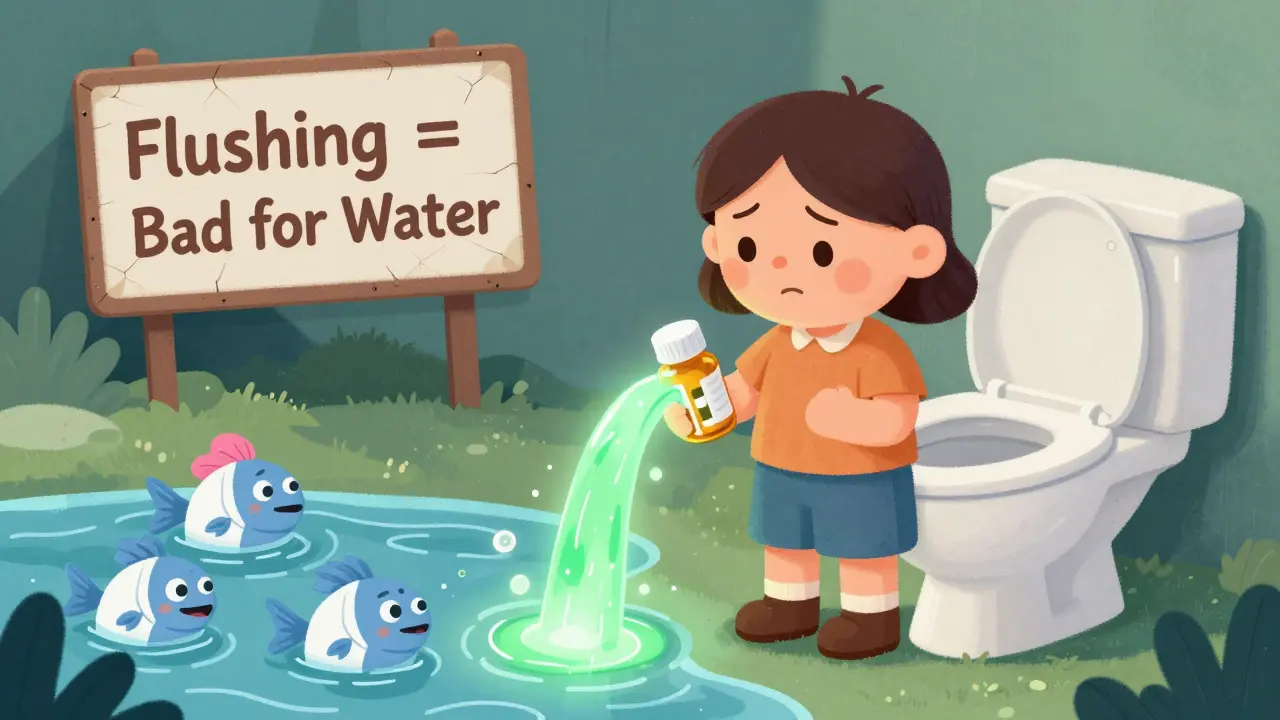
Every year, millions of Americans flush unused pills down the toilet or pour liquid medicine into the sink, thinking they’re doing the right thing. But what they’re actually doing is sending drugs straight into rivers, lakes, and even drinking water. This isn’t a distant problem-it’s happening right now, in your backyard, in your local stream, and in the water that comes out of your tap. The science is clear: flushing medications harms aquatic life, contributes to antibiotic resistance, and contaminates ecosystems in ways we’re only beginning to understand.
How Medications End Up in Our Water
It starts with how our bodies process drugs. When you take a pill, only about 20% to 30% of the active ingredient is absorbed. The rest? It passes through your system and ends up in sewage. That’s normal. But here’s the problem: wastewater treatment plants weren’t designed to remove these tiny chemical molecules. They’re built to clean out solids, bacteria, and nutrients-not drugs like ibuprofen, antidepressants, or birth control hormones. Then there’s the second, avoidable source: direct flushing. People flush expired pills, leftover antibiotics, or unused painkillers because they don’t know what else to do. The U.S. Geological Survey found traces of over 100 different pharmaceuticals in 80% of the rivers and streams they tested across 30 states. Some of the most common offenders? Acetaminophen, ibuprofen, diclofenac, and ciprofloxacin. These aren’t just floating around harmlessly. Studies show fish developing female characteristics from estrogen exposure. Aquatic insects are becoming less fertile. And in some cases, bacteria in the water are becoming resistant to antibiotics-making real infections harder to treat in humans.Why Flushing Isn’t the Answer
You might have heard that flushing is okay for certain drugs. That’s true-but only for a very short list. The FDA allows flushing for just 15 medications, mostly powerful opioids like fentanyl and oxycodone. These are the ones that could kill someone if found by a child or stolen. For everything else-antibiotics, blood pressure pills, cholesterol meds, antidepressants-flushing is the worst option. Why? Because once those drugs hit the water, they don’t disappear. They don’t break down easily. Some turn into even more toxic byproducts. Others stick around for years. A study of landfill leachate found acetaminophen concentrations as high as 117,000 nanograms per liter-far above what’s found in treated wastewater. That’s not a typo. That’s 117 thousand times higher than what’s typically seen in rivers. And that’s coming from trash, not toilets.The Real Culprit: Excretion vs. Disposal
Some experts argue that flushing isn’t the biggest problem-our bodies naturally excreting drugs is. And they’re right. Most pharmaceuticals in water come from urine, not toilets. But here’s the key difference: excretion is unavoidable. We need medicine to live. Flushing unused pills? That’s entirely preventable. Think of it this way: if you left a bottle of bleach on the counter and your kid drank it, you’d blame yourself. But if you threw that same bottle in the trash and it leaked into the groundwater, you’d say, “I didn’t know.” The truth is, most people don’t know. A 2021 FDA survey found only 30% of Americans even knew take-back programs existed. And only 15% of U.S. counties have permanent drug collection sites. That’s not a failure of behavior-it’s a failure of access and education.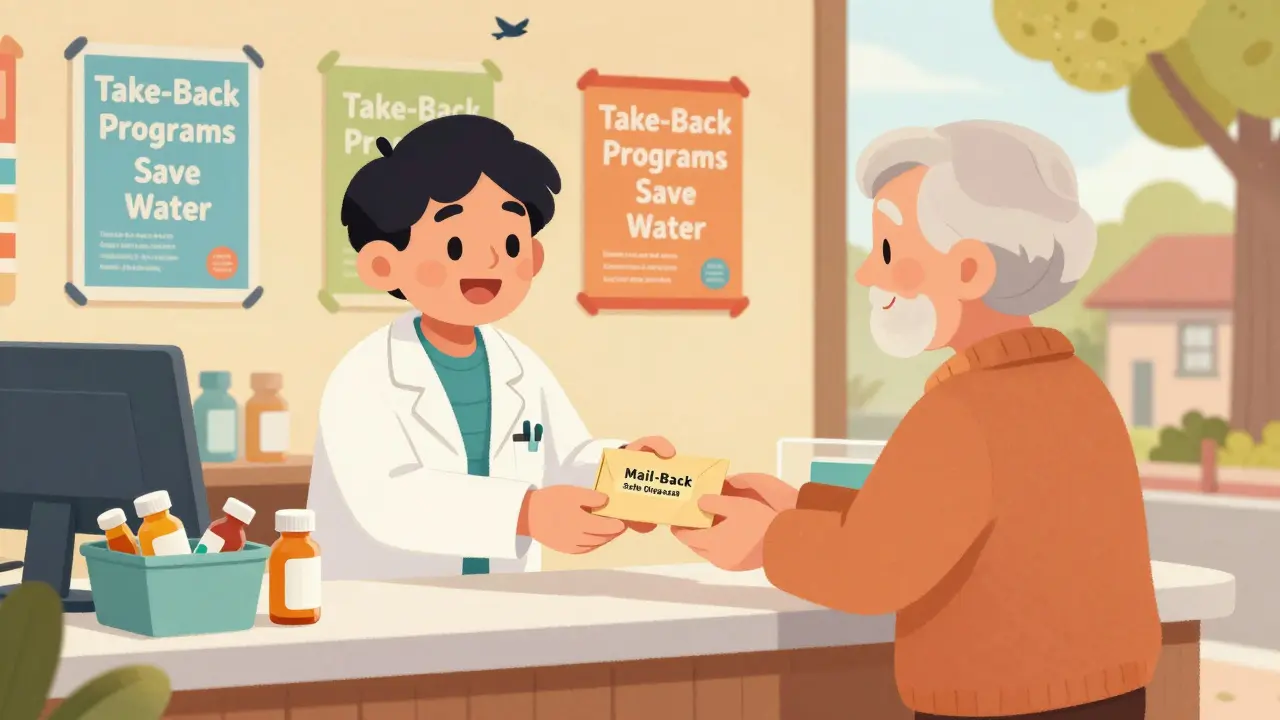
What You Can Do: Safe Disposal Alternatives
There are three real options for getting rid of unused meds. And only one of them is truly safe for the environment.- Take-back programs - These are the gold standard. Pharmacies, hospitals, and police stations host collection bins where you can drop off pills, patches, and liquids. No questions asked. No ID needed. In 2023, the DEA reported over 2,140 authorized collection sites across the U.S., mostly in cities. If you live near one, use it. If you don’t, ask your local pharmacy to start one. Some states, like California, now require pharmacies to give you disposal info with every prescription.
- Mail-back programs - Many pharmacies and manufacturers offer prepaid envelopes. You put your meds in, seal it, and drop it in the mail. It goes straight to a facility that incinerates the drugs safely. This works great for rural areas where drop-off sites are miles away.
- Home disposal (last resort) - If no take-back option exists, mix your pills with something unappetizing: coffee grounds, cat litter, or dirt. Put them in a sealed container-like a jar or ziplock bag-and toss them in the trash. Don’t crush them. Don’t flush them. Don’t put them in recycling. This isn’t perfect, but it’s better than flushing. It reduces the chance someone will dig them out and misuse them.
Why Take-Back Programs Are the Only Real Solution
Take-back programs stop pharmaceuticals before they enter water or soil. They don’t rely on people reading labels or remembering rules. They’re simple: bring it in, leave it, walk away. And they work. In Germany, where take-back programs are widespread, only 7% of tablets get flushed. In the U.S., that number is closer to 30%. The difference? Access and awareness. The European Union has gone further. They require drugmakers to pay for take-back programs under Extended Producer Responsibility laws. That means companies that profit from selling drugs also pay to clean up the waste. It’s fair. It’s effective. And it’s starting to spread. In the U.S., the 2010 Secure and Responsible Drug Disposal Act gave pharmacies the legal green light to run these programs-but funding has been patchy. That’s why most are still limited to big cities.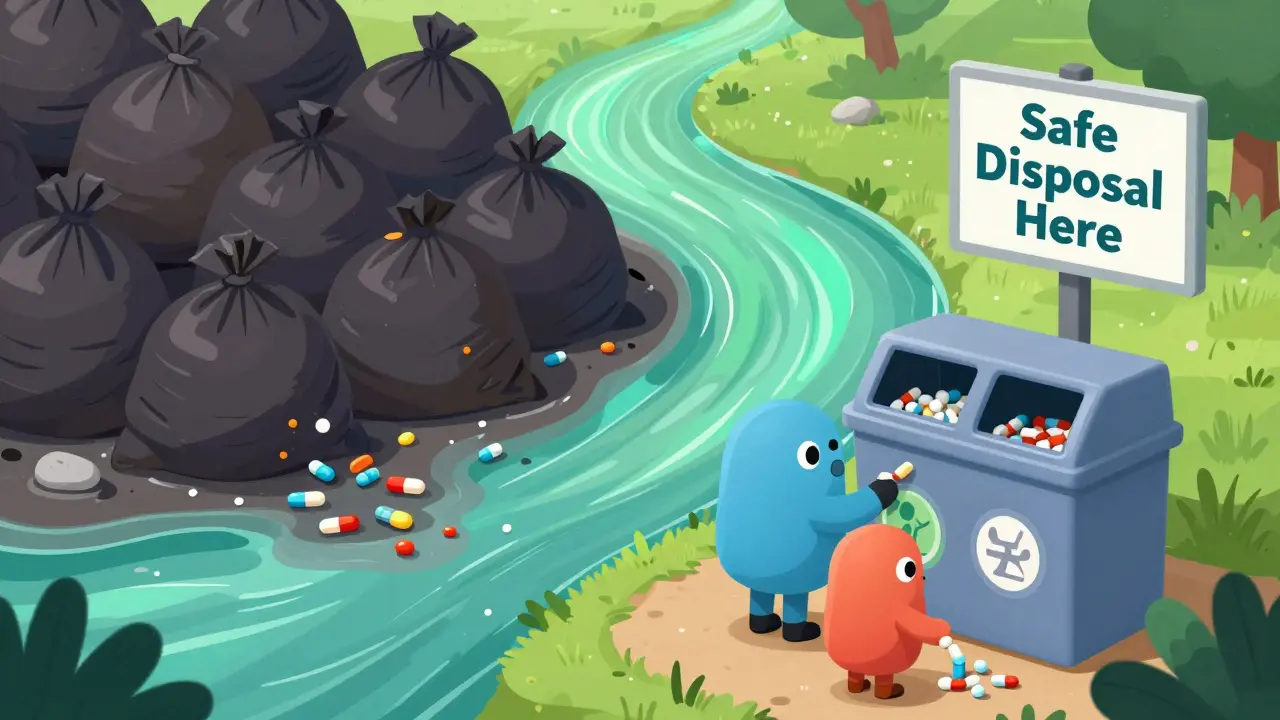
The Bigger Picture: Prevention Matters Most
The truth? The best way to stop pharmaceutical pollution is to stop creating it in the first place. Doctors often prescribe more pills than patients need. A 30-day supply for a condition that clears up in 7 days? That leaves 23 pills behind. Pharmacists rarely warn people about disposal. Insurance companies don’t incentivize smaller prescriptions. And patients? They hoard meds “just in case.” The solution isn’t just better bins. It’s better prescribing. It’s patient education. It’s pharmacies asking, “Do you need all 60 of these?” instead of just handing them out. It’s insurance plans covering only what’s needed, not what’s profitable. One study found that if doctors prescribed 10% fewer unnecessary pills, environmental contamination from improper disposal would drop by 60%. That’s not science fiction. That’s policy change.What’s Being Done-And What’s Not
There’s progress. California passed SB 212 in 2024, forcing pharmacies to include disposal instructions on every prescription. The EU now requires new drugs to undergo environmental risk testing before approval. Advanced water treatment systems using ozone or activated carbon can remove up to 95% of pharmaceuticals-but they cost half a million to two million dollars per plant. Few cities can afford that. Meanwhile, companies are selling home disposal kits like “Drug Buster” for $30. They promise to neutralize meds using chemicals. But they’re expensive, hard to use, and not widely available. And they still end up in landfills. The real answer? We need a system that works for everyone-not just people who live near a pharmacy or can afford a $30 gadget.What You Should Do Today
1. Check your medicine cabinet. Find expired, unused, or unwanted pills. 2. Go to takebackday.dea.gov or call your local pharmacy. Find the nearest drop-off location. 3. If none exists, mix pills with coffee grounds or cat litter, seal them in a container, and throw them in the trash. 4. Ask your doctor to prescribe only what you’ll actually use. 5. Spread the word. Tell friends, family, neighbors. Most people still think flushing is fine. This isn’t about being perfect. It’s about being better than you were yesterday. One less pill flushed means one less chemical in the water. One more person using a take-back bin means one more step toward real change.Is it ever okay to flush medications?
Yes-but only for 15 specific medications on the FDA’s flush list, mostly powerful opioids like fentanyl and oxycodone. These are the only drugs where the risk of accidental poisoning or misuse outweighs the environmental risk. For everything else-antibiotics, blood pressure pills, antidepressants, birth control, pain relievers-flushing is never the right choice. Always check the FDA’s current list before flushing anything.
Can I just throw meds in the trash without mixing them?
Technically, yes-but it’s not safe. Unmixed pills in the trash can be dug up by kids, pets, or people looking for drugs. Mixing them with coffee grounds, dirt, or cat litter makes them unappealing and harder to recover. It also prevents them from dissolving and leaching into groundwater if the trash ends up in a landfill. Always seal them in a container first.
Why don’t more pharmacies offer take-back bins?
Cost and logistics. While federal law allows pharmacies to run take-back programs, they’re not required to. Setting up secure collection bins, storing meds safely, and arranging for proper destruction costs money. Many small pharmacies can’t afford it. Some states offer grants or partnerships with law enforcement to help, but nationwide coverage is still rare. Only 15% of U.S. counties have permanent drop-off sites.
Do take-back programs really make a difference?
Yes. In countries like Germany and Sweden, where take-back programs are common and well-publicized, less than 10% of unused medications end up in water or landfills. In the U.S., where programs are limited, nearly 30% of people still flush or trash their meds. The difference is clear: when access is easy, behavior changes. More bins = less pollution.
What about liquid medications? Can I pour them down the drain?
No. Liquid meds are even more dangerous to flush because they dissolve instantly and enter waterways without delay. Instead, mix them with an absorbent material like kitty litter or sawdust in a sealed container, then throw them in the trash. Some pharmacies accept liquids in sealed containers at take-back events. Always call ahead to confirm.
Are biodegradable or compostable drug disposal bags a good option?
Not yet. While some products claim to break down pharmaceuticals, most haven’t been tested in real-world conditions. Even if they degrade, the chemicals may still enter soil or water. Until independent studies prove they’re safe and effective, stick with FDA-recommended methods: take-back programs, mail-back, or mixing with absorbents before trash disposal.
Adebayo Muhammad
March 8, 2026 AT 01:44Let’s be brutally honest: this isn’t about pills. It’s about capitalism’s refusal to internalize externalities. You flush a pill? That’s not negligence-it’s a symptom of a system that externalizes toxicity onto rivers while CEOs collect dividends. The FDA’s 15-drug list? A performative gesture. Real accountability means forcing manufacturers to fund destruction infrastructure-not asking you to mix your antidepressants with cat litter like some kind of eco-sorcerer.
And don’t get me started on “take-back programs.” They’re a Band-Aid on a hemorrhage. If you think this is a behavioral problem, you’re ignoring the structural rot: 80% of pharmaceuticals enter waterways through excretion-because we’re medicating an entire civilization. We’re not fixing the pipe-we’re just handing out wet wipes.
The EU’s Extended Producer Responsibility? Now we’re talking. Make the drug companies pay for the waste they create. Not the consumer. Not the taxpayer. The corporations who profit off our chronic conditions. That’s justice. Not “mix it with coffee grounds” and call it a day.
And yes-I’m aware this sounds like a manifesto. But if you’re still flushing ibuprofen because “no one told me,” then you’re not ignorant-you’re exploited. The system doesn’t want you to know. Knowledge is liability. Silence is profit.
Pranay Roy
March 9, 2026 AT 03:17Wait-so you’re telling me the government doesn’t want us to flush meds because it’s ‘bad for the environment’? But what if it’s actually a covert bioweapon? Think about it. They’re monitoring water supplies. Tracking pharmaceutical residues. Maybe they’re building a database of who’s taking what. SSRIs in the water? That’s not pollution-it’s population control. They want us docile. Depressed. Quiet. And now they’re blaming us for flushing? Classic distraction.
I’ve been collecting my old pills in a jar. I’m not flushing them. I’m saving them. For when the power grid goes down. And the water gets cut. And the feds start testing. Who’s gonna have the edge then? The guy who mixed his meds with cat litter? Or the guy who kept them? Just saying.
Joe Prism
March 9, 2026 AT 23:41Flushing meds is stupid. But so is pretending we can solve this with drop-off bins. We’re medicating a nation. Every. Single. Day. And now we’re supposed to feel guilty about the byproduct? The real issue isn’t disposal-it’s overprescribing. Why do I need 60 oxycodone for a wisdom tooth extraction? Because the system incentivizes volume. Not care.
Take-back programs? Great. But they’re a luxury. In rural America? No bins. No mailers. No help. So people do what they’ve always done: toss it. Or flush it. The answer isn’t more guilt. It’s fewer pills. Period.
Bridget Verwey
March 11, 2026 AT 14:15Oh honey. You’re not a bad person for flushing. You’re a victim of a system that never told you what to do. And now you’re being lectured like you’re the villain? No. You’re the canary. And we’re all still pretending the song isn’t a warning.
Here’s the thing: if your pharmacy gave you a free, pre-paid envelope with your prescription-would you still flush? Probably not. But they don’t. Because it costs money. And profit comes before prevention.
So stop beating yourself up. Start demanding change. Ask your pharmacist. Call your rep. Demand take-backs. And if they say no? Tell them you’ll take your business elsewhere. Because we’re not here to be eco-warriors-we’re here to be customers who demand better.
Andrew Poulin
March 13, 2026 AT 12:51Ian Kiplagat
March 15, 2026 AT 07:28Interesting. I live in the UK. We have take-back bins at every pharmacy. No questions. No hassle. People just… do it. It’s normal. Like recycling. We don’t need guilt trips. Just infrastructure.
And honestly? The cat litter thing? Kinda gross. But I get it. Better than the river.
🫡
Amina Aminkhuslen
March 16, 2026 AT 08:11Oh sweet baby Jesus. You’re telling me people still flush their Xanax like it’s toilet paper? And you want to act surprised? This is America. Where we sell opioids like candy and then act shocked when someone gets addicted. Now we’re mad because the water tastes like Prozac? Welcome to the dystopia, folks. You’ve been living in it since 2003.
And don’t even get me started on “mail-back envelopes.” That’s a scam for people who think they’re doing good while still being lazy. If you’re too lazy to drive 10 miles to a pharmacy, you’re part of the problem. Stop pretending.
amber carrillo
March 17, 2026 AT 22:40Thank you for sharing this important information. It is clear that proper disposal of medications is essential for protecting our environment and public health. I will be sharing this with my family and encouraging them to use take-back programs whenever possible. Small actions, when multiplied, can lead to meaningful change.
Roland Silber
March 19, 2026 AT 03:03Here’s the thing no one talks about: most people don’t flush because they’re careless. They flush because they’re scared. They’re scared of their kid finding the leftover painkillers. Scared of a relative stealing their Xanax. Scared of being judged for hoarding meds.
So yes, we need better systems. But we also need to stop shaming. Ask yourself: if you had a bottle of unmarked pills in your drawer, would you flush it? Or would you panic? We’re not solving this with pamphlets. We’re solving it with trust. With safety. With access.
And if you’re a pharmacist? Put a bin in your window. Don’t wait for a law. Just do it.
Patrick Jackson
March 20, 2026 AT 23:02I cried reading this. Not because I flushed something. But because I didn’t know. Not once. Not ever. Not in 42 years of life. And now I’m sitting here, staring at my medicine cabinet like it’s a crime scene. I’ve got 17 bottles. Half expired. Half useless. And I thought I was doing the right thing.
So I’m driving to the pharmacy tomorrow. No excuses. No ‘I’ll do it later.’ Tomorrow. And I’m telling my mom. My sister. My cousin who’s on 8 meds and thinks flushing is fine. This isn’t about being perfect. It’s about being awake.
Thank you. 🙏
Weston Potgieter
March 21, 2026 AT 17:29