Lot Number Tracking: How the FDA Identifies Problem Batches in the Food Supply
 Dec, 3 2025
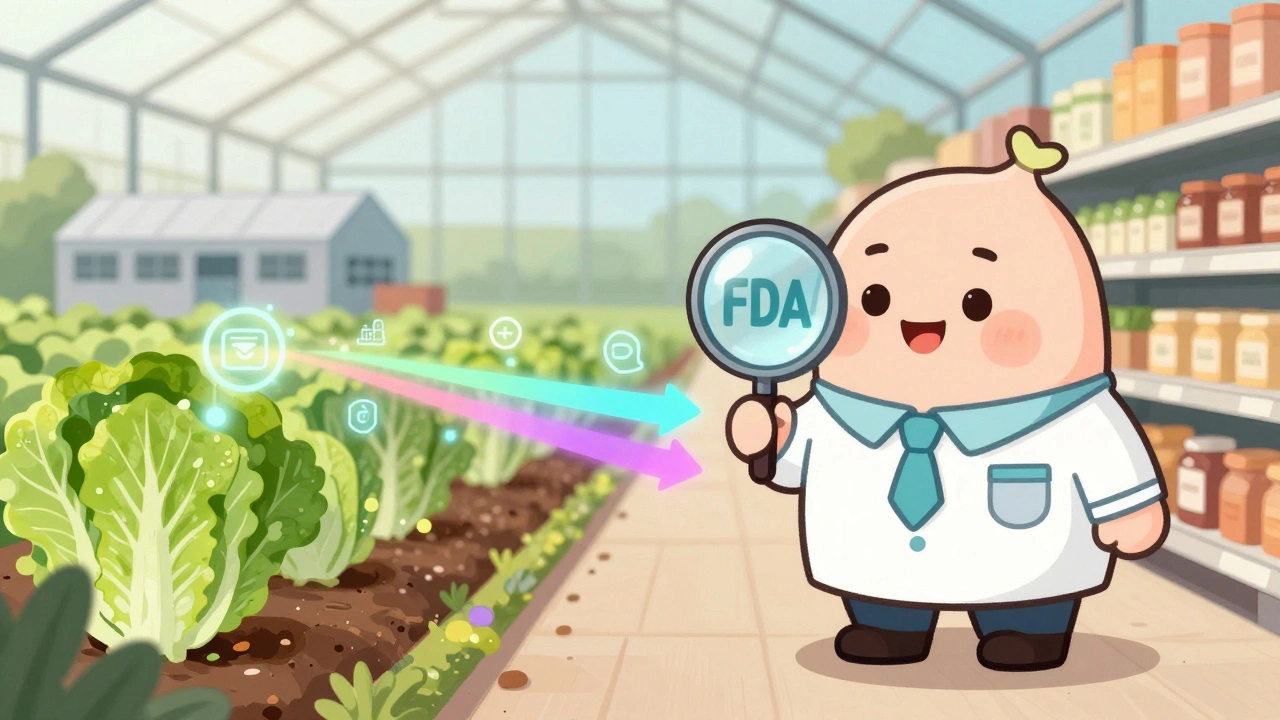
The FDA doesn’t guess where contaminated food came from. It follows a trail - and the key to that trail is the lot number. Since the Food Safety Modernization Act (FSMA) took effect, every high-risk food item in the U.S. supply chain must carry a unique Traceability Lot Code (TLC). This isn’t just a label. It’s a digital fingerprint that lets the FDA trace a contaminated batch from your grocery shelf all the way back to the farm, packing house, or processing plant - in hours, not weeks.
Why Lot Numbers Matter More Than Ever
Before the FDA’s Traceability Lot Code system, tracking a foodborne illness outbreak was like searching for a needle in a haystack blindfolded. Investigators had to call dozens of suppliers, sift through paper records, and piece together shipping logs. During the 2018 E. coli outbreak linked to romaine lettuce, it took over six weeks to pinpoint the source. By then, thousands were sick, and millions of pounds of produce were destroyed unnecessarily. The TLC system changed that. Now, when someone gets sick from contaminated food, the FDA can request electronic records from any company in the chain. Within 24 hours, they get back the lot number, where it came from, where it went, and how much was shipped. That’s the difference between a slow, costly investigation and a fast, targeted recall.What Exactly Is a Traceability Lot Code (TLC)?
A TLC is an alphanumeric code assigned to a specific group of food items - a lot - that shares the same origin and handling history. It’s not the same as a company’s internal batch code. The FDA requires it to be unique across the entire supply chain, not just within one company’s system. Think of it like a passport number for a shipment of food: once it leaves the source, that number travels with it until it reaches the consumer. The FDA doesn’t dictate how the code is created. A company can use a Julian date + product code (like 2025001-LG02), a random string (like X7K9P2-MN), or even their existing internal lot number - as long as it’s consistent and traceable. The key is documentation. Every company must keep a written Traceability Plan explaining how they assign and track these codes.Where and When Lot Numbers Are Assigned
You can’t just slap a TLC on a product anytime you want. The FDA sets strict rules for when it must be applied:- At the first point of packing for raw agricultural commodities (like lettuce, tomatoes, or onions) - usually the farm or packing facility.
- At the first land-based receipt for seafood caught at sea - meaning the first time it hits U.S. soil after being caught.
- When food is transformed - like when tomatoes are turned into salsa, or milk is made into cheese.
The Seven Key Data Elements That Make It Work
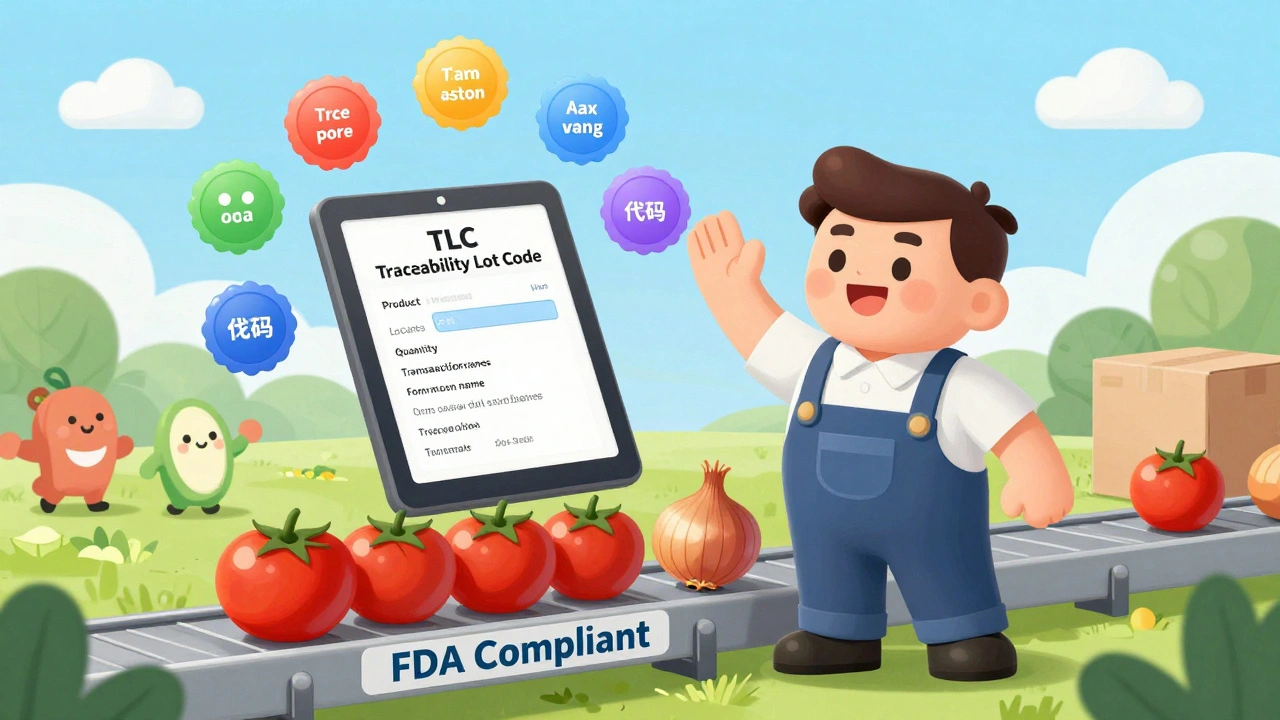
A TLC alone isn’t enough. The FDA requires it to be linked to seven specific pieces of information, called Key Data Elements (KDEs). These are the details that turn a code into a live trail:- Traceability Lot Code (the code itself)
- Product description (what the food is)
- Quantity and unit of measure (how much was shipped)
- Location where the TLC was assigned (the facility address)
- Transaction information (who sent it, who received it, and when)
- Common name of the food (as defined by FDA)
- Form of the food (whole, chopped, frozen, etc.)
Which Foods Are Covered?
Not every food needs a TLC. The FDA created a Food Traceability List (FTL) of high-risk items that cause the most outbreaks. These include:- Leafy greens (romaine, spinach, kale)
- Tomatoes
- Onions
- Fresh-cut fruits and vegetables
- Soft cheeses (like brie or queso fresco)
- Shell eggs
- Nut butters
- Specific seafood (like shrimp, crab, and tuna)
How Companies Are Adapting
Most large food companies already had traceability systems in place. Walmart, for example, required blockchain-based tracking for leafy greens as early as 2019. But for smaller farms and processors, the change has been costly and complex. A 2023 survey found that 78% of produce companies had already updated their systems to meet TLC requirements. The average cost per company was $42,500. Many used existing ERP software (72%), while others bought specialized traceability tools (21%). A small number still rely on spreadsheets - but that’s risky. The FDA requires records to be sortable and exportable. A handwritten log won’t cut it. The biggest hurdles? Integrating old systems (65% of companies report issues), training staff (58%), and making sure suppliers all use the same standards (71%). The FDA has responded with 12 free training modules and a Traceability Assistance Program for small businesses.What Happens When a Problem Is Found?
Imagine a customer in Chicago gets sick from Salmonella in packaged salad. The CDC reports the case to the FDA. The FDA pulls the product’s UPC and matches it to the lot number on the package. They then request the KDEs from the processor. Within hours, they know which farm supplied the lettuce, which packing house mixed it, and which distributors shipped it. They issue a recall for only that specific lot - not every bag of salad on the shelf. That’s the power of the TLC. In pilot tests, the FDA reduced outbreak response time from 14 days to under 24 hours. They estimate this could cut foodborne illnesses by 20-30% annually - preventing tens of thousands of cases and saving $60 million in healthcare and lost productivity costs.
Challenges and Criticisms
The system isn’t perfect. Critics say the Food Traceability List is too narrow. Consumers Union pointed out that melons, which caused a deadly Listeria outbreak in 2020, aren’t included. Others worry about data silos - if every company uses different software, the records might not talk to each other. Industry groups also raised concerns about "tandem coding" - having to run both an internal lot code and a TLC. The FDA clarified in its final rule: your existing code can be your TLC, as long as it meets the requirements. No need for double work. Another issue: compliance is delayed. The original deadline was January 20, 2026. But after industry pushback, the FDA proposed pushing it to July 20, 2028. That gives small businesses more time - but it also means the system won’t be fully active for another three years.The Bigger Picture
The TLC system is the biggest upgrade to U.S. food safety since the Bioterrorism Act of 2002. It’s not about controlling every step of the supply chain - it’s about making sure the right data is there when it matters most. Internationally, the EU is moving toward Digital Product Passports with different standards. The FDA is now talking to global regulators to align systems. Without that, U.S. exporters could face barriers abroad. Meanwhile, new tech is coming. The FDA is funding pilot projects using IoT sensors and blockchain to track temperature and handling conditions in real time. The goal isn’t just to trace a problem - it’s to prevent it before it happens.What This Means for You
If you’re a consumer, this system means fewer contaminated products on shelves. Fewer recalls. Faster answers when something goes wrong. You’ll never see the TLC on your packaging - but you’ll feel its effect when a foodborne illness outbreak is contained before it spreads. If you’re in food production or distribution, compliance isn’t optional. The FDA has enforcement power. Non-compliant companies can face fines, import holds, or even shutdowns. But the long-term payoff is clear: trust from retailers, fewer losses from unnecessary recalls, and a stronger reputation in a market that demands transparency.What’s Next?
The FDA plans to expand the Food Traceability List in 2025-2026. Melons, sprouts, and ready-to-eat meals are under review. They’re also working on standardized data formats to make record-sharing easier across systems. The goal? A food system where a single contaminated item can be traced and removed before it reaches thousands of people. The lot number is the thread that holds it all together.What is a Traceability Lot Code (TLC)?
A Traceability Lot Code (TLC) is a unique alphanumeric identifier assigned to a specific batch of food on the FDA’s Food Traceability List. It links the product to critical supply chain data like origin, quantity, and movement. Unlike internal batch codes, a TLC must remain consistent across all companies handling the product and must be recorded electronically for FDA access during investigations.
Which foods require a TLC under FDA rules?
The FDA’s Food Traceability List (FTL) includes high-risk foods linked to frequent outbreaks: leafy greens, tomatoes, onions, fresh-cut fruits and vegetables, soft cheeses, shell eggs, nut butters, and certain seafood like shrimp and tuna. These represent about 15% of U.S. food supply by volume but cause the majority of foodborne illnesses. The list is expected to expand in 2025-2026 to include items like melons and sprouts.
When does the FDA’s TLC rule take effect?
The final rule was published in November 2022, but compliance is now delayed until July 20, 2028. The FDA proposed this 30-month extension in September 2023 after industry feedback cited challenges in implementing new systems. Small businesses can access free technical support through the FDA’s Traceability Assistance Program.
Can I use my existing lot code as the TLC?
Yes. The FDA explicitly states that any existing lot code a company uses can serve as the Traceability Lot Code - as long as it is unique across the supply chain, properly documented, and passed along with all required data elements. There’s no need to create a second code unless your current one doesn’t meet the FDA’s requirements.
What happens if a company doesn’t comply with TLC requirements?
Non-compliance can lead to enforcement actions by the FDA, including import alerts, refusal of entry for shipments, mandatory recalls, fines, or even facility shutdowns. The FDA has the authority to request records within 24 hours during an investigation, and failure to provide accurate, complete data is considered a violation of the Food Safety Modernization Act.
How does TLC differ from blockchain traceability systems?
The TLC system is a regulatory requirement focused on linking food to key data elements using a unique code. Blockchain systems (like those used by Walmart) are voluntary technologies that store data on a decentralized ledger. While blockchain can enhance transparency, the TLC is the baseline legal standard. Many companies use both - blockchain for customer trust and TLC to meet FDA mandates.
Is electronic recordkeeping mandatory for TLC?
Electronic records aren’t required by law, but they’re practically necessary. The FDA demands that records be sortable, exportable, and delivered within 24 hours of request - which is nearly impossible with paper or handwritten logs. Most companies use digital systems like ERP software or cloud-based traceability platforms to meet this standard.
Gareth Storer
December 4, 2025 AT 04:33So let me get this straight - we’re spending millions so the FDA can read a barcode faster? Meanwhile, my local grocery store still sells expired yogurt with a smile. 🤡
Pavan Kankala
December 4, 2025 AT 18:22Lot numbers? Please. This is just another government ploy to track us. Next they’ll embed microchips in the packaging. You think they care about your safety? Nah. They care about control. The real outbreak? The one of surveillance capitalism. Wake up, sheeple.
Jessica Baydowicz
December 5, 2025 AT 12:37OMG I just realized - this is like a food superhero origin story!! 🦸♀️🥬 One little code, and suddenly the FDA becomes a traceability ninja, swooping in to save the day before anyone gets sick. I’m so here for it. Also, can we make TLC stickers for our fridges? ‘I support traceability!’ - yes please.
Yasmine Hajar
December 5, 2025 AT 20:25As someone who grew up in a family that ran a small dairy, I’ve seen how messy food safety used to be. Paper logs, phone calls at midnight, guessing which batch made someone sick… this system? It’s not perfect, but it’s honest. It doesn’t fix everything - but it gives us a fighting chance. And for small operators? The FDA’s help program? It’s a lifeline. Don’t hate the tool - learn how to use it.
Karl Barrett
December 7, 2025 AT 16:26The ontological shift here is profound: the food item is no longer merely a commodity, but a node in a distributed epistemic network - a semiotic carrier of provenance, rendered legible through algorithmic governance. The TLC, as a performative signifier, collapses the hermeneutic distance between producer and consumer, enacting a new regime of alimentary accountability. But let’s be real - this only works if the data isn’t siloed. Interoperability isn’t a feature - it’s the precondition for epistemic coherence in the food supply chain.
Libby Rees
December 7, 2025 AT 18:21It’s good to see real progress. The system is clear, practical, and enforceable. No drama. No overcomplication. Just data - accurate, timely, and accessible. That’s all we need.
Gillian Watson
December 9, 2025 AT 15:55Love that this is finally happening. Used to be you’d hear about an outbreak and think ‘well, someone’s gonna pay for this’ - but now, it’s not about blame, it’s about fixing it fast. Good job, FDA.
Jordan Wall
December 10, 2025 AT 03:03Ugh. Another gov’t mandate. 🙄 Why can’t we just trust the market? Also, I tried to read the PDF and my eyes glazed over - like, is this even human readable? And why do they use so many acronyms?? TLC? KDE? FTL? Are we in a tech startup or a bureaucracy? 🤦♂️ #Overwhelmed #SendHelp #FoodRegulationIsAScaryWord