Lower GI Bleeding: Diverticula, Angiodysplasia, and How Doctors Diagnose It
 Jan, 17 2026
What exactly is lower GI bleeding?
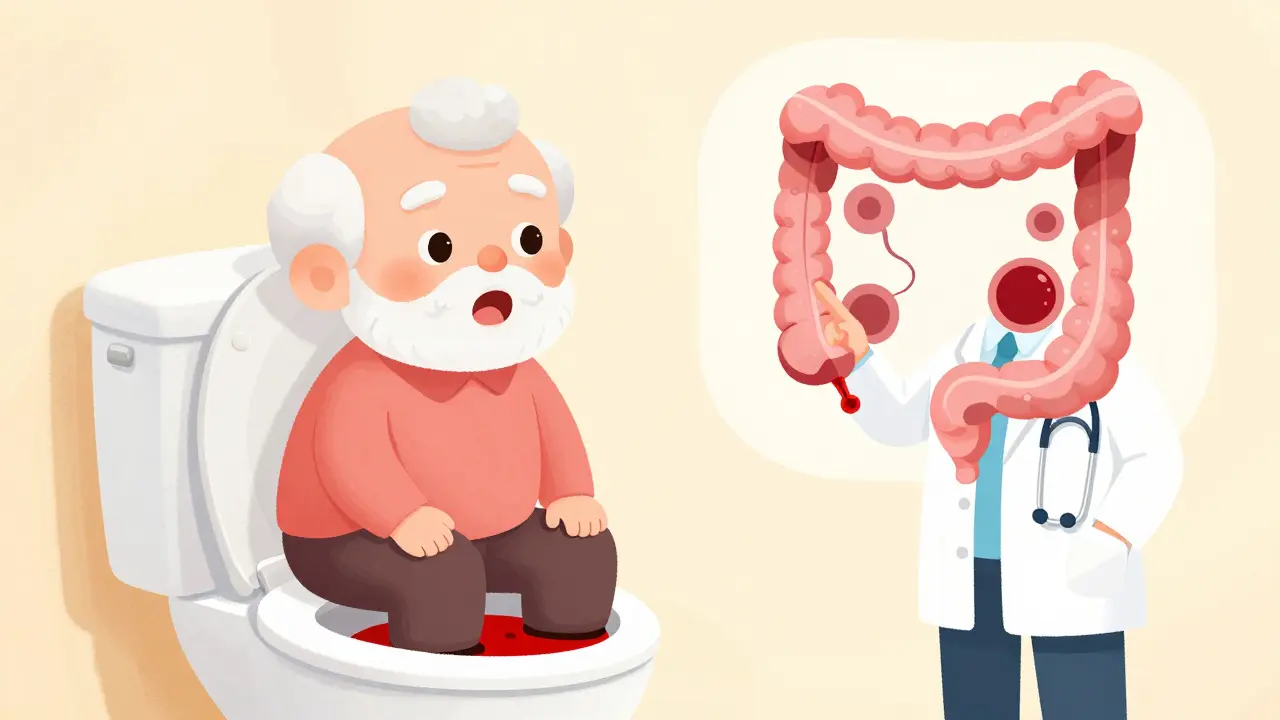
Lower gastrointestinal (GI) bleeding means blood is coming from somewhere in your colon or rectum. You might notice bright red blood in your stool, or maroon-colored stools. Sometimes it’s obvious. Other times, it’s just fatigue, dizziness, or anemia that sends you to the doctor. About 1 in 5 cases of all GI bleeding happens in the lower tract, and it’s most common in people over 60. The good news? Most cases stop on their own. The tricky part? Figuring out why it’s happening.
Diverticula: The Most Common Culprit
Diverticulosis - tiny pouches that bulge out from the colon wall - affects more than half of people over 60. Most never know they have them. But when a blood vessel running near one of these pouches gets torn, it can bleed hard and fast. This is diverticular bleeding. It’s usually painless, sudden, and scary. You might lose a cup of blood in minutes. The vessel doesn’t need to be inflamed to rupture; it just needs to be in the wrong place. Studies show diverticula cause 30% to 50% of all hospitalizations for lower GI bleeding. The bleeding often stops by itself, but if it doesn’t, doctors turn to colonoscopy. During the procedure, they can inject epinephrine or use heat to seal the vessel. Even with treatment, about 1 in 4 people will bleed again within a year.
Angiodysplasia: The Silent Bleeder
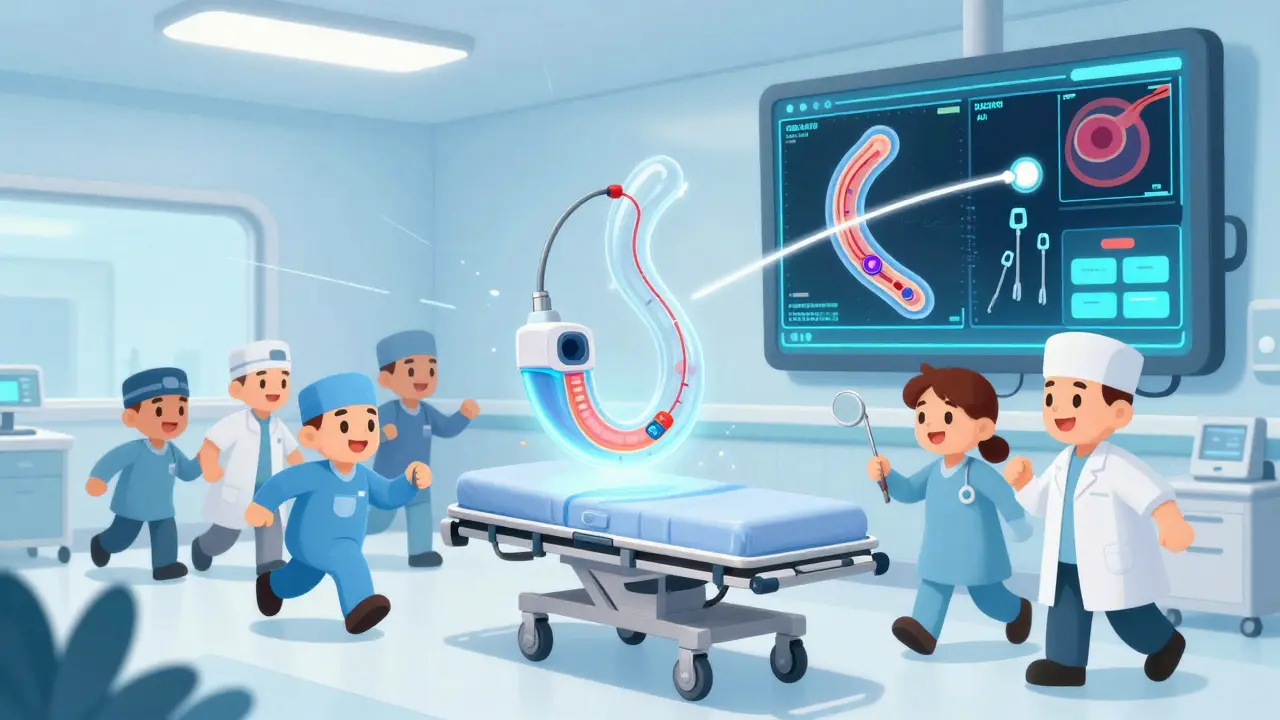
Angiodysplasia - also called vascular ectasia - is when small blood vessels in the colon become twisted, enlarged, and fragile. They’re most common on the right side of the colon and almost always show up in older adults. The average patient is 72. Unlike diverticula, this isn’t about structure - it’s about aging blood vessels. Over time, normal bowel movements stretch and weaken these vessels until they leak. The bleeding is usually slow. You might not even see blood in your stool. Instead, you feel tired, short of breath, or pale because you’re slowly losing iron. Many people are diagnosed only after years of unexplained anemia. Angiodysplasia causes 3% to 6% of LGIB cases, but some older studies say it’s higher. Why the range? Because many doctors miss it on colonoscopy if they’re not looking closely. New AI tools during colonoscopy are now helping spot these lesions 35% more often.

How Do Doctors Figure Out What’s Causing the Bleed?
First, they check if you’re stable. Low blood pressure, fast heart rate, or hemoglobin under 10 g/dL means you need urgent care. Blood tests come first: CBC to check your red blood cells, coagulation tests to see if you’re clotting normally, and a type and crossmatch in case you need a transfusion. Then comes the gold standard: colonoscopy. The sooner, the better. A 2015 study showed doing colonoscopy within 24 hours cuts death risk by 26% compared to waiting 48 to 72 hours. You don’t need a perfect bowel prep in an emergency - IV fluids and a drug called erythromycin can clear the colon enough for a good look. During the scope, doctors look for diverticula, red spots (angiodysplasia), polyps, or signs of inflammation. If they find the source, they can often treat it right away - with clips, heat, or injections.
What If the Colonoscopy Shows Nothing?
About 1 in 5 people with lower GI bleeding have no obvious cause on colonoscopy. That’s called obscure GI bleeding. The next step? Look further down the line. Capsule endoscopy - swallowing a tiny camera - finds the source in about 62% of these cases. But it’s not perfect. In 15% of people, the capsule gets stuck if there’s a hidden narrowing in the bowel. That’s why some doctors wait until after a negative colonoscopy before using it. Another option: device-assisted enteroscopy. This uses a special scope with balloons to reach deeper into the small intestine. It finds bleeding in 71% of cases but needs a skilled endoscopist and is harder to do. For active, fast bleeding, CT angiography is a game-changer. It can spot a vessel leaking as slowly as half a milliliter per minute. If you’re too unstable for colonoscopy, or if the bleed is too quick, this scan can pinpoint the spot so interventional radiologists can plug it with coils or glue.
Treatment: What Works for Diverticula vs. Angiodysplasia
Diverticular bleeding often resolves without treatment. Rest, fluids, and blood transfusions if needed are the first line. If it keeps coming back, and they find the exact diverticulum on colonoscopy, they can treat it with thermal coagulation or clips. Rebleeding happens in 20% to 30% of cases, so follow-up is key. Angiodysplasia is trickier. Argon plasma coagulation (APC) - a kind of targeted heat therapy - stops the bleeding right away in 80% to 90% of cases. But the vessels can regrow. Up to 40% of patients bleed again within two years. For those with frequent recurrences, doctors now use thalidomide - yes, the old morning sickness drug. A 2019 study showed it cuts transfusion needs by 70% in people with recurring angiodysplasia. Octreotide, a hormone-like drug, helps too, especially in patients with heart conditions like aortic stenosis. That’s because aortic stenosis can break down a key clotting protein, making angiodysplasia more likely. If all else fails, surgery: right hemicolectomy for right-sided angiodysplasia, or a segmental resection for a single bleeding diverticulum.
What’s the Long-Term Outlook?
Most people recover well. The 30-day death rate for diverticular bleeding is 10% to 22%, but that’s mostly because patients are older and have other health problems - heart disease, kidney issues, diabetes. The bleed itself rarely kills. Angiodysplasia has lower mortality - 5% to 10% - but higher recurrence. People with chronic angiodysplasia often go through years of repeated hospital visits, iron infusions, and frustration. One patient group reported an average of 18 months from first symptoms to diagnosis. That’s a long time to feel weak and tired without knowing why. The good news? Survival rates five years after a bleed are around 80% for both conditions. Your outcome depends less on the bleeding and more on your overall health.
What’s New in 2026?
Technology is changing how we find and treat this. AI-assisted colonoscopy now highlights subtle vascular lesions in real time. New endoscopic clips are holding tighter and working better - one European trial showed 92% success stopping diverticular bleeding. There’s also a major NIH trial underway right now testing thalidomide vs. placebo for recurrent angiodysplasia. Results are expected late this year. Hospitals are also starting to use standardized LGIB protocols - checklists, rapid-response teams, and clear pathways - to make sure no one slips through the cracks. The goal isn’t just to stop the bleed. It’s to prevent the next one, and to help people get back to feeling normal.
When Should You Worry?
If you’re over 60 and suddenly see bright red blood in your stool - even once - get checked. Don’t assume it’s hemorrhoids. If you’re younger but have unexplained fatigue, pale skin, or shortness of breath, ask for a blood test. Iron deficiency anemia in older adults isn’t normal. It’s a red flag. And if you’ve had a negative colonoscopy but still feel unwell, push for more testing. Angiodysplasia and small bowel bleeds are easy to miss. You know your body best. If something feels off, keep asking until you get answers.
Jake Moore
January 19, 2026 AT 08:12Don't ignore fatigue if you're over 60. I thought my dad was just 'getting old' until he passed out in the kitchen.
AI-assisted colonoscopy? My GI doc said it's like having a second set of eyes. He missed a tiny angiodysplasia last time. This time, the AI flagged it in real-time. Game changer.
Joni O
January 20, 2026 AT 02:38thallidomide sounds wild but i’d try it. anything to stop the endless cycles of hospital visits. i just want to feel like me again.
Ryan Otto
January 21, 2026 AT 10:05Nishant Sonuley
January 22, 2026 AT 09:47Emma #########
January 23, 2026 AT 23:25Robert Cassidy
January 24, 2026 AT 12:49Andrew Qu
January 26, 2026 AT 06:29kenneth pillet
January 26, 2026 AT 20:36Jodi Harding
January 28, 2026 AT 19:07Danny Gray
January 30, 2026 AT 07:19Tyler Myers
January 30, 2026 AT 12:20Zoe Brooks
February 1, 2026 AT 08:19if you're reading this and your parent/grandparent is always tired-ask for blood work. please. it could save them.
thank you for writing this. it's important.
Kristin Dailey
February 1, 2026 AT 10:00Wendy Claughton
February 2, 2026 AT 07:29This post didn’t just inform me-it gave me hope.
My husband had angiodysplasia for 4 years. We went through 3 negative colonoscopies. He was depressed. I felt helpless. Then we found a GI specialist who actually listened. She ordered a capsule endoscopy. Found 5 lesions. APC worked. He’s back to gardening.
It’s not just about the bleed. It’s about being seen.
Thank you for seeing us.