Medication Reviews: When Seniors Should Stop or Deprescribe Medicines
 Dec, 24 2025
More than half of adults over 65 take five or more prescription drugs every day. Some of those pills may no longer be helping them - and could even be hurting them. It’s not about cutting corners. It’s about deprescribing: the careful, intentional process of stopping medicines that don’t belong anymore.
Why Stopping Medicines Can Be Healthier Than Keeping Them
It’s easy to assume that more meds mean better care. But for older adults, that’s often not true. Taking too many drugs - called polypharmacy - raises the risk of falls, confusion, kidney damage, and hospital visits. In the U.S., over $30 billion is spent each year treating side effects from medications that older people shouldn’t be taking. Many of those reactions are preventable. Deprescribing isn’t about quitting meds cold turkey. It’s about asking: Is this still doing more good than harm? For someone with advanced dementia, a statin to lower cholesterol might not matter if they’re not living long enough to benefit from it. For someone with frailty and no heart disease, a blood thinner might increase their risk of a dangerous bleed more than it prevents a stroke. The idea isn’t new. It was first formally proposed in 2003 by an Australian doctor. Since then, research has shown that when done right, stopping unnecessary drugs reduces hospital readmissions by up to 25% and cuts adverse drug events by 17-30%. Quality of life improves - people feel clearer-headed, less dizzy, and more in control.When It’s Time to Talk About Stopping
You don’t need to wait for a crisis to start this conversation. Here are clear signs it’s time to review your meds:- You’ve started noticing new symptoms - dizziness, confusion, fatigue, stomach upset - after adding a new drug. These aren’t just "getting older." They could be side effects.
- You’ve been diagnosed with a serious condition like advanced dementia, end-stage heart failure, or cancer with limited life expectancy. Preventive drugs (like those for high cholesterol or osteoporosis) may no longer make sense.
- You’re on high-risk drugs: benzodiazepines for sleep, antipsychotics for agitation, long-term proton pump inhibitors (PPIs) for heartburn, or multiple blood thinners together.
- You’re taking drugs meant to prevent future problems - like a daily aspirin or a bone drug - but you’re not living long enough to see the benefit.
How Deprescribing Actually Works
This isn’t a one-time decision. It’s a process. First, your doctor or pharmacist looks at your full list - all prescriptions, over-the-counter pills, vitamins, and supplements. They use tools like the Beers Criteria or STOPP guidelines, which list drugs that are risky for older adults. But the real work happens when they ask: What matters to you? If you want to stay independent at home, a medication causing dizziness needs to go. If you’re tired of swallowing 12 pills a day and just want to feel more like yourself, some drugs can be dropped. Then, they pick one drug to try stopping. Not all at once. Stopping one at a time lets you see what changes. Did your sleep improve? Did your nausea go away? Did your balance get better? That’s the feedback loop that guides the next step. Some drugs need to be tapered slowly - like antidepressants or steroids. Others can be stopped quickly - like a daily antacid you’ve been taking for years without a diagnosis. Your pharmacist can help you figure out which.Who Should Be Involved
This isn’t just your doctor’s job. It’s a team effort. Clinical pharmacists are often the best people to lead medication reviews. They’re trained to spot interactions and unnecessary drugs. Many hospitals and community pharmacies now offer free medication reviews for seniors. Ask your pharmacy if they do it. Family members and caregivers play a big role too. They notice changes in mood, energy, or memory that the patient might not mention. They can help track symptoms after a drug is stopped. And you - the patient - are the most important voice. If you feel worse on a drug, say so. If you’re taking something because "the doctor said so," but you don’t remember why, speak up. Your preferences matter. Your goals matter. Your quality of life matters.
What Happens When You Stop
Some people worry that stopping a drug will make their condition worse. That’s a real concern - but only if done without care. For example, stopping a PPI (a heartburn pill) might cause temporary rebound acid, but that usually fades in days. Stopping a sleep aid might lead to short-term insomnia, but many older adults find they sleep better naturally after a few weeks. The key is monitoring. Your doctor should schedule a follow-up - even just a quick call - within two weeks. Ask: Did anything change? Any new symptoms? If something bad happens, you can restart. But if you feel better? That’s the win. Studies show that when deprescribing is done carefully, disease outcomes don’t get worse. Blood pressure stays controlled. Diabetes stays managed. The only thing that changes is fewer side effects and more freedom.Barriers and Myths
Why isn’t this done more often? One big reason: doctors aren’t trained to stop things. Medical education focuses on starting treatments, not stopping them. Many prescriptions get renewed automatically - year after year - without review. Another myth: "If it’s not broken, don’t fix it." But if a pill is causing you to stumble, or making you foggy-headed, it’s broken. You don’t need to suffer just because a drug was prescribed years ago. Also, patients often feel guilty about questioning their doctor. But asking, "Should I still be taking this?" is smart. It’s part of being an active partner in your care.What You Can Do Right Now
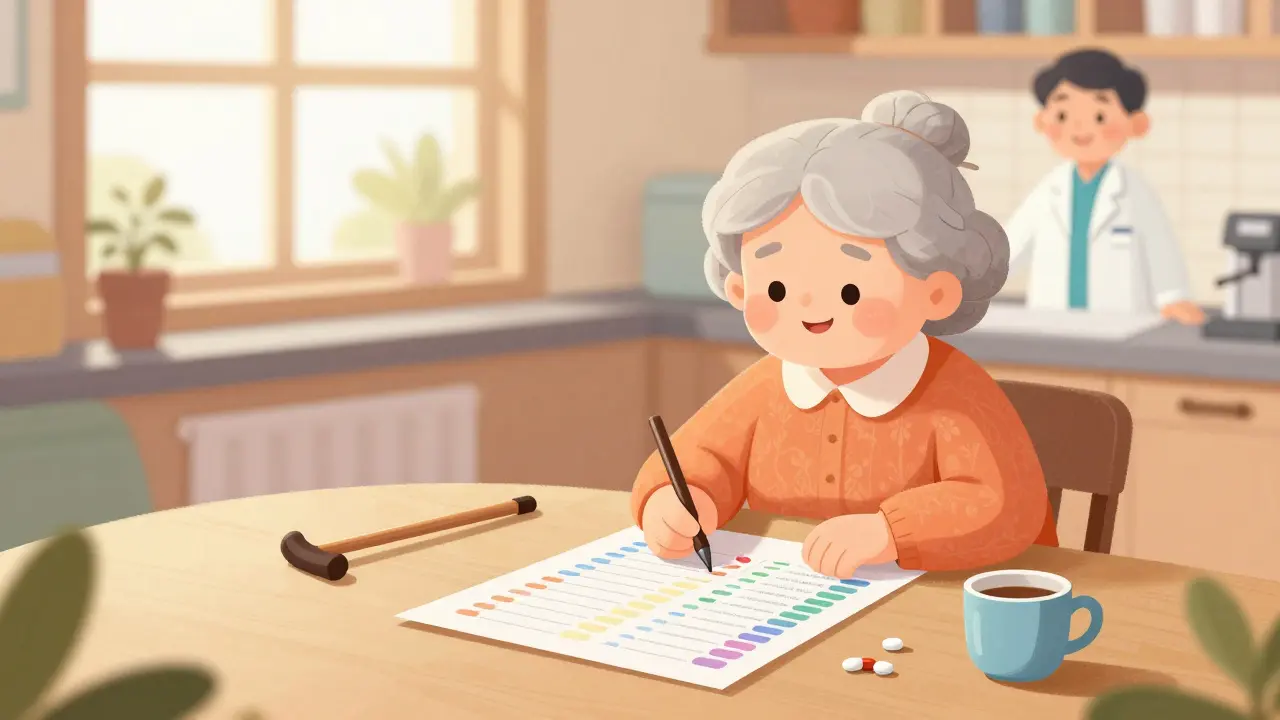
You don’t need to wait for an annual checkup. Here’s what to do today:- Write down every medication you take - including vitamins, herbal supplements, and over-the-counter pills.
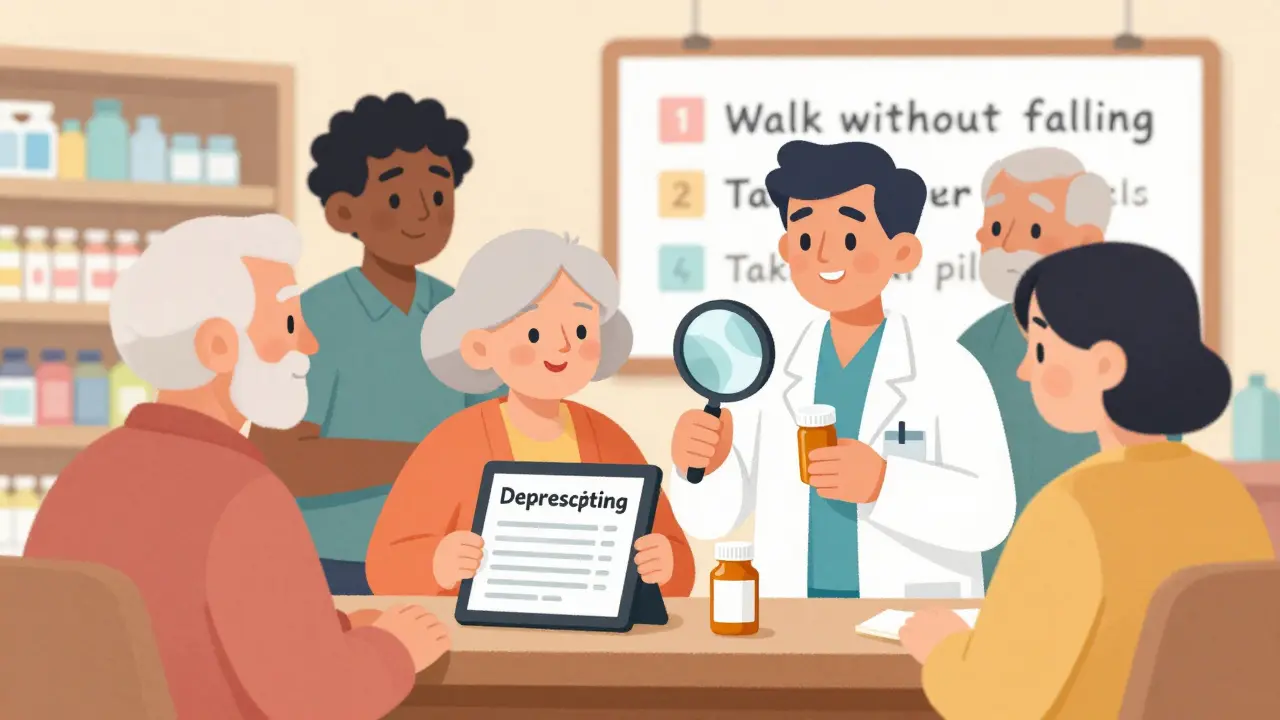
- Ask your pharmacist to review them. Many offer free medication reviews.
- Make a list of your health goals: "I want to walk without falling," "I want to stop feeling tired all day," "I want to take fewer pills."
- Bring that list to your next doctor visit and say: "I’d like to talk about which of these I still need."
- Ask: "If we stopped this, what would we watch for? What would happen if it didn’t work?"
The Bigger Picture
This isn’t just about one person’s pill bottle. It’s about a broken system. In Scotland, the number of older adults on five or more drugs doubled in 15 years. In the U.S., it tripled. That’s not progress. That’s a public health risk. Organizations like the World Health Organization and the U.S. Agency for Healthcare Research and Quality now call deprescribing a key patient safety strategy. Electronic health records are starting to flag high-risk meds. Apps like Deprescribing.org offer free guides for common drugs - from sleeping pills to acid reducers - with step-by-step plans for stopping safely. The future is personalized. AI tools are being tested to predict which seniors are most at risk from polypharmacy. But right now, the most powerful tool is simple: asking the right questions.Frequently Asked Questions
Is deprescribing safe for seniors?
Yes, when done properly. Deprescribing means stopping only the drugs that are no longer needed or that cause more harm than benefit. It’s done one medication at a time, with close monitoring. Studies show it reduces falls, confusion, and hospital stays. The key is working with a doctor or pharmacist - never stopping on your own.
What if my symptoms come back after stopping a drug?
That’s why you monitor. Some symptoms, like heartburn after stopping a PPI, may return temporarily. Others, like dizziness from a sleep aid, may disappear completely. Your doctor will tell you what to watch for and when to call. If symptoms return and are troubling, you can restart the drug. But often, the body adjusts, and the original problem doesn’t come back.
Can I stop taking blood pressure or diabetes meds if I feel fine?
Never stop these without talking to your doctor. But you might not need the same dose. Sometimes, lifestyle changes - better diet, more movement, weight loss - mean you need less medication. Your doctor can check your numbers and adjust safely. Feeling fine is a good sign - it might mean your meds are working, not that you can quit them.
Are there specific drugs seniors should always try to stop?
Yes. The Beers Criteria lists drugs that are risky for older adults. Common ones include benzodiazepines (like diazepam for sleep), anticholinergics (like diphenhydramine in sleep aids), and long-term PPIs. These are linked to confusion, falls, and kidney problems. But the decision depends on your health, not just the drug name. A pharmacist can help you know which ones to review.
How often should seniors have a medication review?
At least once a year. But if you’ve been hospitalized, started a new drug, or noticed new symptoms like dizziness or memory issues, do it right away. Medication needs change as health changes. Don’t wait for your next appointment - ask sooner.
sagar patel
December 25, 2025 AT 05:01Deprescribing is just the pharmaceutical industry’s way of offloading liability. If you stop a drug, who’s to blame when something goes wrong? The doctor? The patient? The system? Nobody. That’s the point.
Christopher King
December 26, 2025 AT 23:05They don’t want you to know this but the FDA and Big Pharma have a secret handshake. Every time you stop a med, they lose millions. That’s why they fund studies that say ‘it’s safe’-they need you to keep buying. I’ve seen my uncle’s dementia get worse after they pulled his statin. Coincidence? I think not.
Terry Free
December 27, 2025 AT 21:19Let’s be real. You’re not ‘deprescribing.’ You’re just letting seniors die faster so Medicare doesn’t pay for their insulin. It’s cost-cutting disguised as compassion. The same people who tell you to ‘live longer’ are the ones cutting your meds. Classic.
Sophie Stallkind
December 28, 2025 AT 14:21While the concept of deprescribing is both clinically sound and ethically imperative, it is critically dependent upon the presence of a structured, interdisciplinary care framework. Without systematic documentation, pharmacist-led reviews, and longitudinal patient monitoring, the risks of adverse outcomes may outweigh the theoretical benefits. A piecemeal approach is not merely suboptimal-it is potentially hazardous.
Linda B.
December 30, 2025 AT 02:21Did you know the WHO has been quietly pushing this since 2018? And guess who funds their ‘patient safety’ campaigns? The same conglomerates that own the hospitals, the pharmacies, and the EHR software. They want you to stop your meds so they can sell you the ‘new’ ones next year. It’s not medicine-it’s a subscription model.
Michael Dillon
December 30, 2025 AT 03:52I’ve been on 12 pills for 8 years. Stopped three last year-blood pressure med, statin, and that weird sleep thing. I sleep better, walk faster, and my stomach doesn’t feel like a chemical spill. Nobody told me I could do this. Why isn’t this on every doctor’s checklist?
Gary Hartung
December 30, 2025 AT 19:11Let’s be honest: the average geriatrician hasn’t read a peer-reviewed paper since 2007. They just hit ‘refill’ on the EHR. Deprescribing? That’s a buzzword for ‘we’re too lazy to think.’ The real problem isn’t polypharmacy-it’s the collapse of clinical judgment. And now we’re outsourcing critical thinking to a checklist called ‘Beers Criteria.’ Brilliant.
Ben Harris
December 31, 2025 AT 09:26I’m 78 and I’ve been on warfarin since 2012. My wife says I’m fine. But I don’t remember why I started it. My doctor didn’t even look at my chart. He just said ‘keep taking it.’ So I did. Now I’m supposed to ask? Who’s going to answer? And what if I ask and they say ‘no’? Then I’m just stuck. This isn’t empowerment-it’s emotional labor.
Oluwatosin Ayodele
December 31, 2025 AT 13:37You Americans think you invented medicine. In Nigeria, we’ve been doing this for decades. Elders take herbs, water, and prayer. If a pill doesn’t help after two weeks, we stop. No forms. No audits. No ‘Beers Criteria.’ We use common sense. You’ve turned healthcare into a bureaucratic nightmare. Stop overcomplicating it.
Jason Jasper
January 1, 2026 AT 05:39I’ve seen this work. My mom stopped her PPI and her acid reflux vanished. She stopped the sleeping pill and started reading before bed. She sleeps deeper now. It wasn’t magic. It was just listening. I wish more doctors would just ask: ‘What do you want your life to look like?’
Mussin Machhour
January 2, 2026 AT 13:21Y’all are overthinking this. If you feel worse on a pill, stop it. If you feel better, keep going. Talk to your pharmacist. They’re not just the people who hand out bottles-they’re the real experts. My grandma dropped three meds last year and now she’s gardening again. No drama. No conspiracy. Just common sense.
Carlos Narvaez
January 2, 2026 AT 21:57Deprescribing is a myth. You can’t just stop meds. The body adapts. You create rebound effects. You create dependency on the idea of stopping. It’s not liberation-it’s pharmacological nihilism disguised as autonomy.
Harbans Singh
January 4, 2026 AT 21:01My dad took 11 pills a day. We sat down with his pharmacist. Turned out two were for a condition he didn’t have anymore. One was a duplicate. One was for anxiety he never told anyone about. We cut five. He cried because he finally felt like himself again. This isn’t radical. It’s just human.
Justin James
January 6, 2026 AT 13:28Here’s what they won’t tell you: the entire geriatric medication system is built on inertia. Doctors get paid for prescribing, not for reviewing. Pharmacies make money on refills. Insurance companies don’t cover medication therapy management unless it’s billed under a specific code that requires three forms and a notarized witness. So they just keep prescribing. And the patients? They’re just supposed to notice the dizziness, the confusion, the falls, the hospital stays-and then blame themselves for not being ‘proactive.’ It’s not negligence. It’s a business model. And it’s killing people slowly. You think this is about health? No. It’s about profit. And the people who designed this system? They’re not doctors. They’re accountants with MDs after their names.