Post-Surgical Pain: Multimodal Strategies and Opioid Sparing
 Jun, 12 2026
Imagine waking up after surgery. The old way meant waiting for the pain to hit, then asking for a strong pill that might make you dizzy or nauseous. That model is fading fast. Today, the standard of care is multimodal analgesia. It’s not just about giving you less opioid medication; it’s about attacking pain from multiple angles so you recover faster, feel clearer, and go home sooner. This approach, often called "opioid-sparing," uses a combination of non-opioid drugs, regional blocks, and even psychological prep to keep pain manageable without relying on heavy narcotics.
If you are facing surgery soon, understanding this strategy can help you prepare. It shifts the focus from "waiting for pain" to "preventing pain." Let’s break down how this works, what medications are involved, and why your medical team is likely moving away from opioids as the first line of defense.
What Is Multimodal Analgesia?
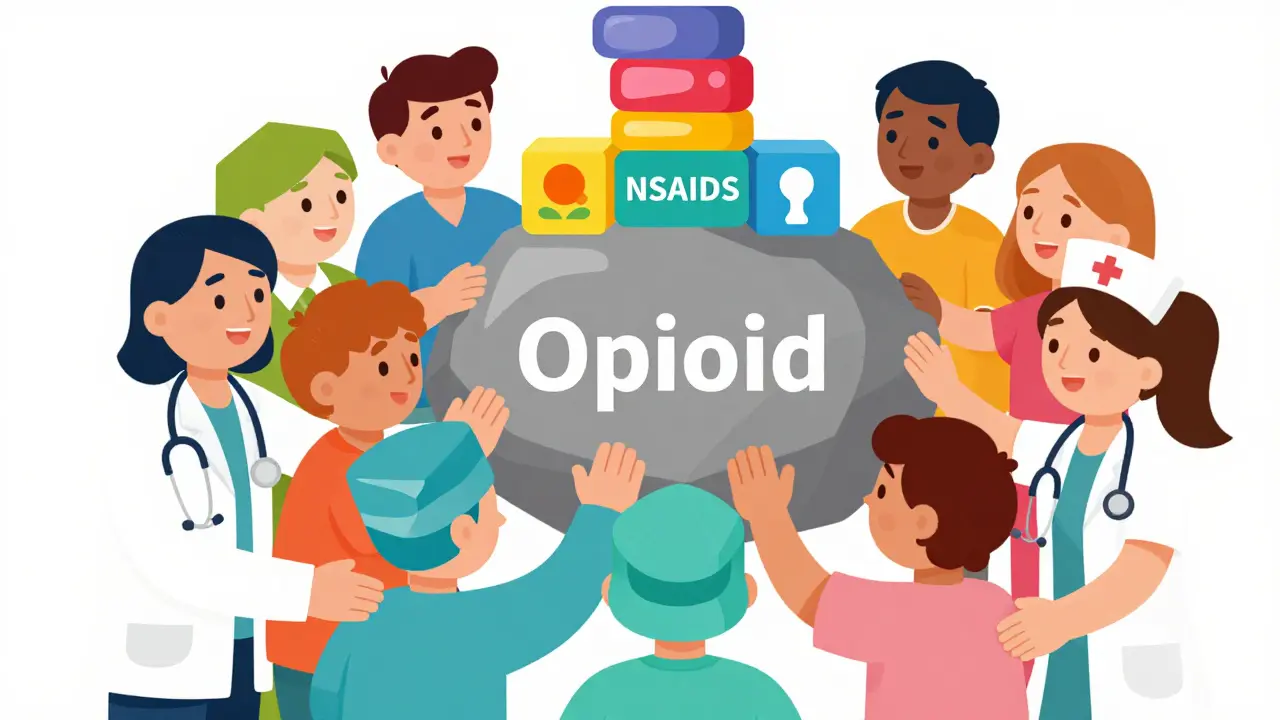
Multimodal analgesia (MMA) is formally defined as using additive or synergistic combinations of painkillers to achieve the relief you need while minimizing side effects. Think of it like a sports team instead of a solo athlete. Instead of one drug doing all the heavy lifting, several agents work together at different points in the pain pathway.
This concept didn’t appear overnight. It emerged as a core part of Enhanced Recovery After Surgery (ERAS) protocols around 2010-2015. The push accelerated significantly after the Centers for Disease Control and Prevention (CDC) released its opioid prescribing guidelines in 2016. By 2023, MMA had become the standard for most surgical specialties. In September 2021, fourteen major professional organizations-including the American Society of Anesthesiologists (ASA) and the American Academy of Pain Medicine-agreed on seven guiding principles for acute perioperative pain management. Dr. Edward R. Mariano from Stanford University, who led this consensus statement, noted that this agreement effectively "reset the bar" for how we handle pain after surgery.
The Core Medications in an Opioid-Sparing Protocol
You won’t get just one type of pill. A typical MMA protocol layers several types of medication before, during, and after your procedure. Here is what you might expect based on established protocols from institutions like Rush University Medical Center and McGovern Medical School.
- Acetaminophen: Often the foundation. You might receive 1000mg orally before surgery and continue with scheduled doses every 6 hours afterward. If you can’t take pills right after surgery (for example, if your bowel function is paused), you’ll get it intravenously.
- NSAIDs (Non-Steroidal Anti-Inflammatory Drugs): Drugs like celecoxib or naproxen target inflammation. Celecoxib might be given as 400mg preoperatively and 200mg twice daily after. Naproxen is another common option, typically 500mg every 12 hours. Note: These require careful checking of kidney function. If your eGFR (estimated glomerular filtration rate) is below 30 mL/min, naproxen is usually contraindicated.
- Gabapentinoids: Gabapentin helps calm nerve-related pain. A common dose is 300-600mg before surgery and 300mg three times daily after. For patients with reduced kidney function (eGFR <30 mL/min), the dose drops significantly to 200mg once daily to avoid toxicity.
- Ketamine: Used in low doses (0.5mg/kg IV bolus intraoperatively), ketamine acts as an NMDA receptor antagonist. It doesn’t just block pain; it helps prevent the nervous system from becoming hypersensitive to pain signals, a condition known as central sensitization.
- Lidocaine Infusion: Given intravenously during and sometimes after surgery, lidocaine provides systemic pain relief and anti-inflammatory benefits. A typical intraoperative dose is a 1.5mg/kg bolus followed by a 2mg/kg/hr infusion.
- Dexmedetomidine: This sedative also has analgesic properties. It’s often used as a 0.5mcg/kg IV bolus or a continuous infusion for high-risk patients to provide steady pain control without respiratory depression.
Opioids are still available, but they are reserved strictly for "breakthrough pain"-those moments when the baseline regimen isn’t enough. If you need more, you might get small, precise doses like morphine 1-2mg IV or hydromorphone 0.2-0.4mg IV every 15 minutes as needed. The goal is to use the lowest effective dose, if any at all.
Why Move Away from Opioids? The Data Speaks
You might wonder, "If opioids work, why change?" The answer lies in side effects and long-term outcomes. Opioids cause nausea, vomiting, constipation, sedation, and respiratory depression. They also carry the risk of dependence.
A 2022 review by the NCBI found that orthopedic patients receiving MMA consumed 41% less opioids compared to those managed with patient-controlled opioid analgesia alone. More importantly, they experienced a 28% lower incidence of postoperative nausea and vomiting (PONV). Less nausea means you can eat and drink sooner, which speeds up recovery.
Evidence from 17 randomized controlled trials involving over 1,200 patients showed that MMA reduces total opioid consumption by 32-57% while maintaining equivalent pain control scores. In spine surgery cases at Rush University, Director of Pain Management Dr. Jayashree Shanker reported reducing average morphine milligram equivalents (MME) from 45.2 per day to just 18.7 per day-a 60.8% reduction-while keeping pain scores below 4 out of 10 on the Numeric Rating Scale.
| Outcome Metric | Traditional Opioid-Centric Care | Multimodal Analgesia (MMA) |
|---|---|---|
| Opioid Consumption | Baseline (100%) | Reduced by 32-57% |
| Postoperative Nausea/Vomiting | Higher Incidence | 28% Lower Incidence |
| Hospital Length of Stay | Longer (e.g., 7.2 days in trauma) | Shorter (e.g., 5.4 days in trauma) |
| Pain Control Scores | Effective but variable | Equivalent or Better |
Who Benefits Most? Tailoring the Approach
MMA isn’t one-size-fits-all. The Compass SHARP Guidelines (2022) highlight specific groups that benefit from enhanced, complex protocols. These include:
- Opioid-dependent patients
- Patients with chronic pain conditions
- Those with a history of severe or refractory postoperative pain
- Patients requesting "opioid-free surgery"
Implementation: How the Team Works Together
Successful MMA requires coordination. It’s not just the surgeon or the anesthesiologist. It involves pain management doctors, pharmacists, PACU nurses, and recovery nurses. At McGovern Medical School, the protocol mandates initiation in the Emergency Department (if applicable) and continuation through discharge. Orders are placed through specific multiphase pathways to ensure no gaps in coverage.
Preoperative preparation is crucial. Rush University emphasizes having antinociceptive therapy in place *before* surgery starts. This "pre-emptive" approach minimizes the burden of pain once you wake up. Postoperatively, pain assessment happens frequently-often every two hours for the first 24 hours-using validated tools to track your response and adjust treatments dynamically.

Challenges and Considerations
While MMA is superior in many ways, it’s not without challenges. Coordination is complex. If you are having orthopedic surgery, the regional anesthesia team needs to communicate with the orthopedic surgeons beforehand to discuss nerve blocks. Timing matters.
Renal and hepatic function assessments are critical. Because MMA relies heavily on NSAIDs and gabapentinoids, your kidneys and liver must be able to process them. This is why blood tests are standard before surgery. If your kidney function is impaired, the dosing changes drastically, or certain drugs are avoided entirely.
Furthermore, MMA excels in procedures with predictable pain patterns, like joint replacements or spine surgeries. It faces more hurdles in complex cases with multiple pain generators. However, the trend is clear: by 2025, projections suggest 85% of major surgical procedures will incorporate formal MMA protocols, up from 60% in 2022.
What This Means for Your Recovery
Adopting multimodal strategies does more than just spare you from opioids. It improves overall outcomes. Dr. Brian H. Chang from McGovern Medical School reported that implementing their trauma pain pathway reduced average hospital length of stay by 1.8 days and increased same-day discharge rates for eligible procedures from 12% to 37%. Faster recovery means less time in the hospital, lower risk of complications like blood clots or infections, and a quicker return to normal life.
Additionally, early evidence suggests MMA may help prevent the transition from acute postoperative pain to chronic pain. By preventing central sensitization (where the nervous system becomes overly sensitive), you reduce the likelihood of long-term pain issues. Guidelines now recommend prescribing a 5- to 10-day course of gabapentinoids upon discharge to support this transition.
Will I still get opioids if I’m in severe pain?
Yes. Multimodal analgesia does not mean "no opioids." It means opioids are reserved for breakthrough pain that isn’t controlled by the non-opioid regimen. You will have access to small, safe doses of morphine or hydromorphone if needed, but the goal is to use them sparingly.
Is multimodal analgesia safe for everyone?
It is highly individualized. Patients with significant kidney or liver disease require dose adjustments or alternative medications. For example, NSAIDs like naproxen are contraindicated if your eGFR is below 30 mL/min. Your medical team will assess your specific health conditions before creating your plan.
How do I prepare for an opioid-sparing surgery?
Discuss your pain history and concerns with your anesthesiologist before surgery. Ask if they use an Enhanced Recovery After Surgery (ERAS) protocol. Be honest about any prior opioid use or chronic pain conditions so they can tailor the multimodal strategy to your needs.
What are the main benefits of avoiding high-dose opioids?
Benefits include significantly lower rates of nausea and vomiting, less sedation, reduced risk of respiratory depression, shorter hospital stays, and a lower risk of developing opioid dependence or transitioning to chronic pain.
Does this approach work for all types of surgery?
MMA is most effective for surgeries with predictable pain patterns, such as orthopedic, spine, and abdominal procedures. While it is becoming the standard for most specialties, complex cases with multiple pain sources may require additional customized interventions.